
Hey surfers! Ready to hunt down some unforgettable waves along Portugal’s wildly dependable coast?
Whether the goal is clean, cruisy walls or fast, heavy surf, Portugal gives you a huge range of wave types within a relatively small country.
From the punchy beach breaks of the west coast to the more sheltered corners down south, there’s a spot that fits almost every mood and skill level.

Peniche (Supertubos, Silver Coast)
Peniche is one of Portugal’s most iconic surf bases, and Supertubos is the wave that puts it on the map.
Think sand-bottom power, quick takeoffs, and sections that can turn into proper barrels when the swell and sandbanks line up.
It’s not a “cruise-around” wave on good days. Supertubos rewards confident surfing and fast decisions, especially once it gets to head-high and above.
What are the best surf spots in Peniche?
Here’s a quick table to help you choose a zone. Skill levels are only a rough guide, if in doubt, ask a local surf school and keep sessions conservative.
| Spot | Skill Level | Wave Size | Best Season |
| Supertubos | Advanced–Expert | Chest-high to well overhead (can be much heavier on bigger swells) | Autumn (often best balance of swell + wind) |
| Cantinho da Baía (Baleal) | Beginner–Intermediate | Usually smaller and softer than Supertubos (highly variable) | Spring–Summer (friendlier learning range) |
| Baleal beaches (general) | Beginner | Typically mellow peaks depending on sandbanks | Spring–Summer |
| Peniche “other peaks” | Intermediate | Depends on wind/swell direction (it’s a pick-and-move zone) | Year-round (choose by forecast) |

Shower gel bottles are really bulky and unkind to the places we travel to: there's enough plastic in the ocean as it is! That's partly why I started Rinsed™: pocket-sized bars to be fresh anywhere I go!


Ericeira (Lisbon District)
Ericeira isn’t just popular, it’s officially recognized as a World Surfing Reserve, which speaks to both its wave quality and the importance of protecting what makes the area special.
It’s a great pick for surfers who want variety close together: you can often switch spots quickly if wind, tide, or swell angle changes.
Expect a mix of friendlier options and serious, high-performance waves—so matching the spot to your confidence matters.
What are the best surf spots in Ericeira?
Use this table as a practical starting point, then refine the decision with the day’s forecast and local advice.
| Spot | Skill level | Typical wave size (meters) | Best months (approx.) |
| Ribeira d’Ilhas | Beginner–Advanced (depends on swell) | 0.5–3.0m | Sep–Apr |
| Coxos | Advanced–Expert | 1.5–4.0m (expert-only when it’s solid) | Oct–Mar |
| Foz do Lizandro | Beginner–Intermediate | 0.5–2.0m | Mar–Oct |
| Praia do Sul | Beginner–Intermediate | 0.5–1.5m | Mar–Oct |
| São Julião | Intermediate–Advanced | 1.0–3.0m | Sep–Mar |

Nazaré (Central Portugal)
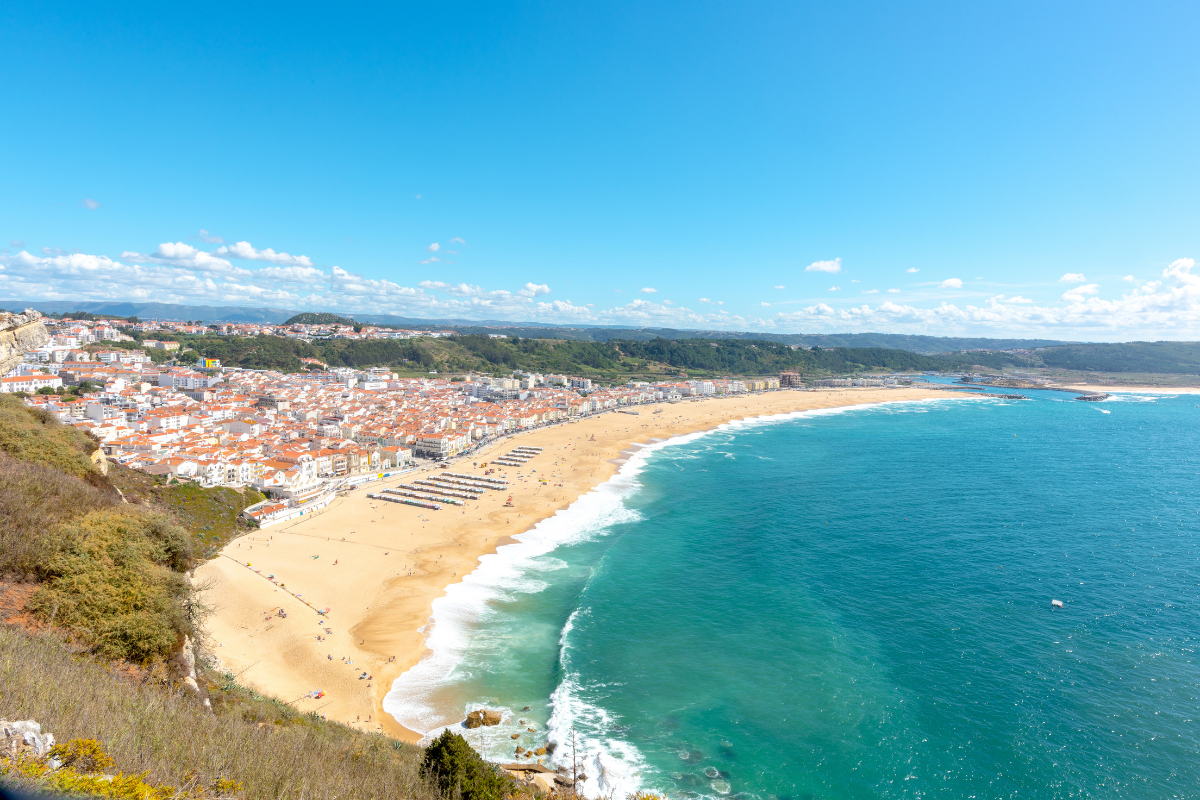
Nazaré is the name everyone knows, mostly because it can shift from “pretty coastline” to genuine big-wave spectacle when winter storms deliver the right swell.
For traveling surfers, it often makes sense to treat Nazaré as a viewing destination unless you’re specifically trained, equipped, and supported for heavy water.
It’s still worth including on a surf trip because it gives a front-row seat to the Atlantic at its most intense.
What are the best surf spots in Nazaré?
This table keeps things simple on purpose, Nazaré’s consequences can be extreme, and local guidance is essential.
| Spot | Skill level | Typical wave size (meters) | Best months (approx.) |
| Praia do Norte | Expert (big-wave specialists only) | Can be enormous in winter storms | Oct–Apr |
| Nazaré town beach | Intermediate (on small/medium days) | 0.5–2.0m | Mar–Oct |
| Nearby manageable beach breaks | Beginner–Intermediate | 0.5–1.5m | Late spring–summer |
| Clifftop viewing (Fort area) | Spectator | N/A | Oct–Apr (best chance of true size) |


Carcavelos (Lisbon / Estoril Coast)
Carcavelos is one of the most convenient “surf-with-a-city” options in Portugal: you can base near Lisbon and still score proper Atlantic surf.
When winter swell arrives, it can turn into powerful, hollow beach-break surf, awesome to watch, and very real to surf.
On smaller days it’s far more approachable, so it’s a spot where picking the right session matters more than chasing a fixed reputation.
What are the best surf spots in Carcavelos?
Think of this as a “choose-your-intensity” beach depending on where the peaks set up and what the swell is doing.

Arrifana (Western Algarve / Costa Vicentina)
Arrifana is a classic Algarve wave that’s easy to fall in love with: a beautiful setting, a dependable setup, and plenty of days that suit improving surfers.
It can be a solid choice when you want a more relaxed rhythm, especially in autumn, while still offering bigger, heavier surf when winter pulses hit.
There’s also a faster, more technical option near the reef/harbour area that’s better left for confident surfers on the right swell.
What are the best surf spots in Arrifana?
Here’s a practical overview of the main nearby options surfers typically rotate through, using seasons as a rule of thumb.
| Spot | Skill level | Typical wave size | Best months (approx.) |
| Arrifana bay (beach break zones) | Beginner–Intermediate | 0.5–2.0m (can get much bigger in winter) | Sep–Nov for the sweet spot |
| Arrifana reef/harbour area | Intermediate–Advanced | Usually needs solid swell; more technical | Sep–Mar |
| Praia da Amoreira | Intermediate–Advanced | Likes size; can be demanding | Oct–Mar |
| Monte Clérigo | Intermediate | Punchy once there’s swell | Sep–Mar |
| Vale Figueiras | Beginner–Intermediate | Often more playful; still Atlantic-exposed | Jun–Aug (smaller, less intense) |
How to surf safely in Portugal (by level)
Choosing a spot that matches your level matters as much as choosing the right forecast—Portugal can go from mellow to heavy depending on season and location.
Beginner
- Stay in lifeguarded areas when available, and pick sandy, forgiving beaches.
- Take a lesson early; it speeds up progress and reduces risk.
- If rips look confusing, don’t guess—ask a surf school or lifeguard.
Intermediate
- Keep the session controllable: if you’re constantly getting worked, the wave is too big or too steep for that day.
- Give extra space in crowds and avoid drifting into the takeoff zone.
- Watch tides and wind swings; messy conditions can ramp up quickly.
Advanced
- Do a proper shoreline read before paddling out: rips, exit points, closeout sections, and where boards are flying.
- Surf with a partner on heavier days and agree on an exit plan.
- If locals warn it’s not working or it’s dangerous, take it seriously and move.

Surf spots in Portugal: locals and the environment
Portugal’s surf zones stay special when visitors treat them like communities, not commodities.
Respect locals
- Follow priority: don’t drop in, don’t snake, and don’t “hunt the inside” through someone else’s rotation.
- Watch the lineup first to understand takeoff spots and where people paddle back out.
- Keep communication calm and simple when it’s crowded.
- Give space: avoid paddling through the impact zone or sitting directly inside someone who’s already positioned.
- Be respectful on land: park cleanly, keep noise down, and stick to access paths.
Respect the environment
- Pack out everything, including wax scraps and tape.
- Stay on marked paths to protect dunes and fragile cliff vegetation.
- Don’t rinse soap/shampoo into drains that flow back to the sea.
- Join a local beach clean if one is happening during the stay.

Summary
Portugal is the kind of surf trip that can be whatever you want: barreling performance waves in Peniche, variety and heritage in Ericeira, city-access surf in Carcavelos, dramatic winter spectacle in Nazaré, or scenic, progression-friendly sessions in Arrifana.
Pick destinations that match your ability, then fine-tune by swell, wind, and tide.
Check the forecast, stay humble, and keep it fun!
Hey, this is Alex, Founder of Rinsed™ and big time surf lover!
Hope we could help you out with this article 🤙🏼
Feel free to also check out our fresh and foamy soap bars designed for sport lovers! 🚿
