
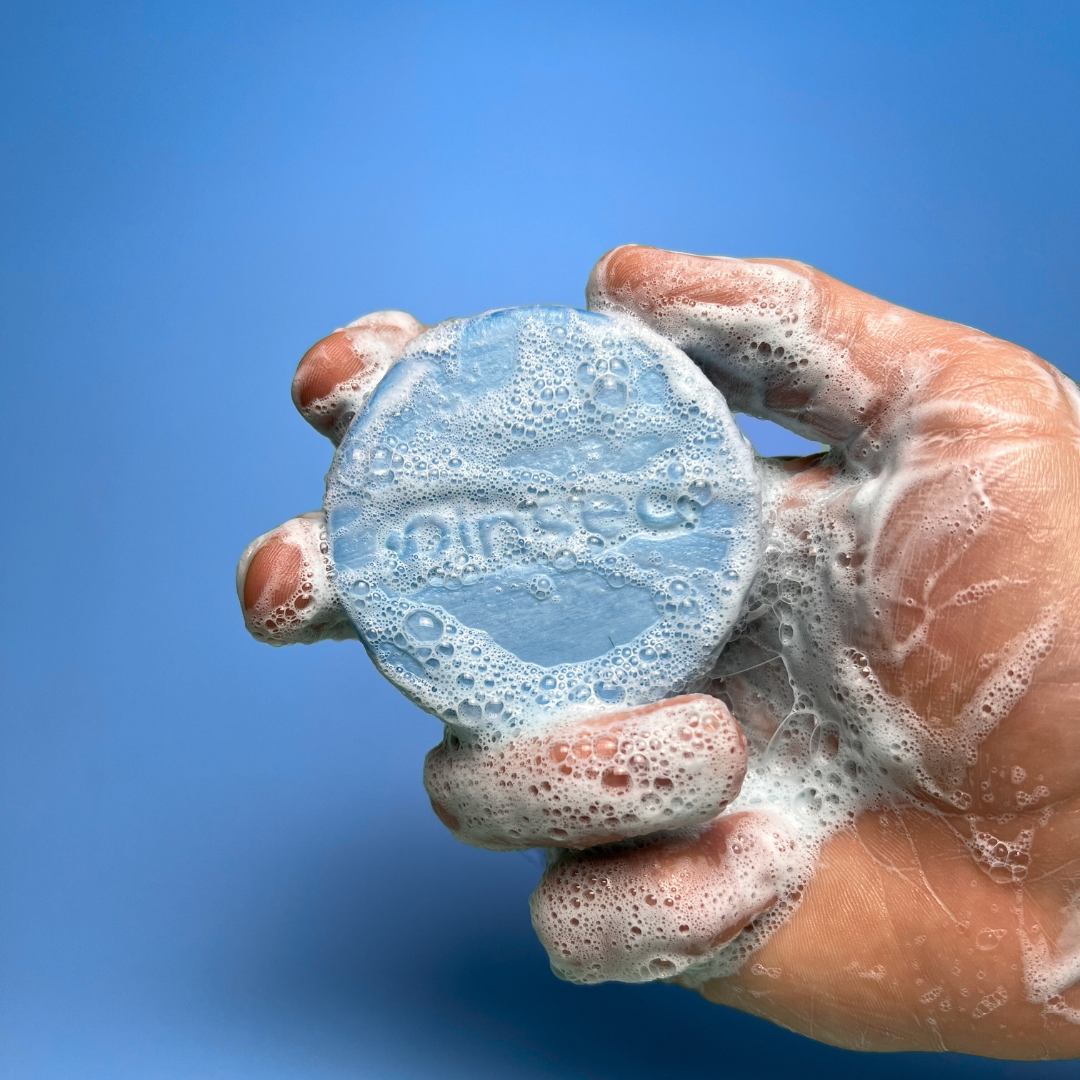
Shampoo bars work in hard water, but only some of them do it well. True soap bars react with the calcium and magnesium in hard water and leave an insoluble residue on your hair. Syndet bars, built from synthetic surfactants rather than saponified fats, do not react the same way and behave much more like liquid shampoo. If your bar is not working in hard water, the bar type is usually why.
Large parts of the Netherlands, Belgium and northern France have moderately hard to hard water, so this is the single most common reason a bar disappoints. This guide covers how to tell what water you have, which bars cope with it, and what to do if you are stuck with the bar you already own.
- 1. Why does hard water affect soap?
- 2. How do I know if I have hard water?
- 3. Which shampoo bars work in hard water?
- 4. How do I make a shampoo bar work in hard water?
- 5. How to do an acidic rinse properly
- 6. Water changes when you travel
- 7. Which kind is Rinsed?
- 8. Summary
- 9. Frequently asked questions
Why does hard water affect soap?
Hard water contains dissolved calcium and magnesium, and true soap reacts with them. The reaction produces an insoluble compound that will not rinse away cleanly. On a bath it is the ring around the tub. On a shower screen it is the film. On hair it is the waxy coating people complain about.
That reaction also uses up the soap, which is why a bar that lathers instantly in soft water needs a lot of rubbing to produce anything in hard water. You end up using more product to get less cleaning, and the excess is what ends up on your hair.
Syndet bars use synthetic surfactants instead. These do not form the same insoluble compounds with calcium and magnesium, so they lather and rinse in hard water much as they do in soft.

Shampoo, body and face wash, all in one bar. Cooling, refreshing and designed for those always on the go.
How do I know if I have hard water?
You can usually tell without a test. Any of these means hard water is likely.
- Limescale. White chalky deposits on the kettle element, shower head or taps.
- Poor lather. Soap that takes real effort to foam, in the shower or at the sink.
- Cloudy glassware. A white film on glasses out of the dishwasher.
- Dry skin after showering. Common in hard water areas, partly from soap residue.
- Your water company's website. Most publish hardness by postcode for free, which is the definitive answer and takes a minute.
| Water | Typical signs | Shampoo bar behaviour |
|---|---|---|
| Soft | Easy lather, no limescale, slippery feeling | Almost any bar works well |
| Moderately hard | Some limescale, decent lather | True soap workable with an acidic rinse |
| Hard | Visible limescale, poor lather | Syndet strongly preferred |
| Very hard | Heavy limescale, soap barely foams | Syndet, plus an acidic rinse |
Which shampoo bars work in hard water?
Look for a syndet bar rather than a true soap bar. The packaging rarely says so directly, which is unhelpful, but the ingredient list gives it away.
| Bar type | What the label tends to show | Hard water performance | Feel |
|---|---|---|---|
| True soap | Saponified oils, sodium olivate, sodium cocoate | Poor, forms residue | Waxy in hard water |
| Syndet | Named surfactants such as sodium cocoyl isethionate | Good | Closer to liquid shampoo |
| Combination | Both of the above | Variable | Depends on the ratio |
A rough rule: if the ingredient list starts with saponified oils, it is a true soap and hard water will be a fight. If it starts with a named surfactant, it is a syndet and it should behave. Our full explainer is what is a syndet bar.
How do I make a shampoo bar work in hard water?
Five things, in the order worth trying them.
- Use less bar and rinse for longer. Free, and it solves a surprising share of cases. Sixty to ninety seconds of rinsing, not fifteen.
- Add an acidic rinse. A tablespoon of vinegar or a quarter teaspoon of citric acid in a mug of water, poured over after washing. This dissolves the residue directly.
- Lather in your hands first. Rubbing the bar directly on hair in hard water deposits more product where you least want it.
- Switch to a syndet bar. If the first three do not fix it, the bar is the problem and no technique will change the chemistry.
- Treat the water. A shower filter or a softener helps, though it is a large step to take for a shampoo bar alone.

Shampoo, body and face wash, all in one bar. Keep your hair and skin healthy on the go. Monoï-infused scent with a touch of vanilla. Designed for those always on the go.
How to do an acidic rinse properly
The point is to neutralise alkaline residue and bring hair back to a slightly acidic state, which is where the cuticle lies flat and hair feels smooth. It is not complicated and it does not need a special product.
| Option | Rough mix | Best for | Travel friendly |
|---|---|---|---|
| Apple cider vinegar | 1 tbsp in a large mug of water | Everyday use at home | No |
| White vinegar | 1 tbsp in a large mug of water | Cheapest option | No |
| Citric acid powder | 1/4 tsp in a large mug of water | Travel and hostels | Yes, packs flat |
| Lemon juice | Half a lemon in a mug of water | Occasional use | No |
Pour over after shampooing, leave thirty seconds, rinse. Two or three times a week is plenty. If you are doing it every single wash and it is still waxy, change the bar rather than the routine.
Water changes when you travel
Hardness varies enormously between countries and even between towns. A bar that works at home can behave completely differently in a hostel in Portugal or a surf camp in Morocco, and that surprises people who assume the bar has gone off.
A small pot of citric acid weighs almost nothing and covers you anywhere. It is worth adding to the wash bag alongside the bar itself. More on packing in hand luggage only: what toiletries you can actually take.
Shampoo, body and face wash, all in one bar. Cooling, refreshing and designed for those always on the go.
Which kind is Rinsed?
Syndet. Our ingredient list opens with Sodium Cocoyl Isethionate with no saponified oils behind it, so the reaction described at the top of this page is not one our bars can have.
Hard water still matters a little. Very hard water can make any bar feel like it lathers less, and it is worth rinsing for a bit longer than you think you need to. But you should not need a vinegar rinse to undo scum that was never formed in the first place.
Summary
Hard water does not stop shampoo bars working, but it does separate the two chemistries. True soap reacts with calcium and magnesium and leaves residue. Syndet bars do not. Check your water hardness, read the ingredient list to work out which bar you have, use less product with a longer rinse, and add an acidic rinse if you need one. If it is still waxy after all that, the bar is wrong for your water.
If your hair already feels coated, why your hair feels waxy after switching to a shampoo bar walks through diagnosing it.
Frequently asked questions
Is Rinsed a soap bar?
No. Rinsed 3-in-1 bars are syndet bars. The ingredient list opens with Sodium Cocoyl Isethionate and contains no saponified oils, so they do not form the insoluble calcium compound that true soap forms in hard water. The full INCI is on every product page.
Do shampoo bars work in hard water?
Syndet bars do, because their synthetic surfactants do not react with calcium and magnesium. True soap bars struggle, because that reaction produces an insoluble residue that clings to hair. The bar type matters far more than the brand.
How do I know if I have hard water?
Limescale on your kettle or shower head, soap that will not lather easily, and a white film on glassware are the everyday signs. Your water company publishes the hardness for your postcode, which settles it in a minute.
Will a vinegar rinse fix hard water hair?
It helps a lot. Soap residue is alkaline, and a dilute acidic rinse dissolves it and smooths the cuticle. About a tablespoon of vinegar in a large mug of water after washing. It is a workaround rather than a cure if the bar itself is wrong for your water.
How do I tell a syndet bar from a true soap bar?
Read the ingredient list. True soap shows saponified oils, often listed as sodium olivate, sodium cocoate or similar. Syndet bars list named surfactants such as sodium cocoyl isethionate. Packaging rarely uses the word syndet, so the ingredients are the reliable tell.
Is hard water bad for your hair?
It does not damage hair directly, but the mineral and soap residue it leaves can make hair feel rough, look dull and become harder to manage. Most of that is removable with an acidic rinse or a bar that does not react with the minerals in the first place.
Does hard water make a shampoo bar run out faster?
Yes, in effect. The reaction with calcium and magnesium consumes some of the bar without cleaning anything, so you use more product per wash to get the same result.
Built for travelling, not just for home
Shampoo, body and face wash in one 80g bar. Nothing to leak in a wash bag, no liquid limits at the airport, and 30 to 60 washes per bar.
Travel with Rinsed™ →30 day money back guarantee, no questions asked.
Alexandre
Founder @Rinsed™
Hey, I’m Alexandre! I started Rinsed™ for people like myself: sporty, hardworking and always on the go. Check out our bars!