
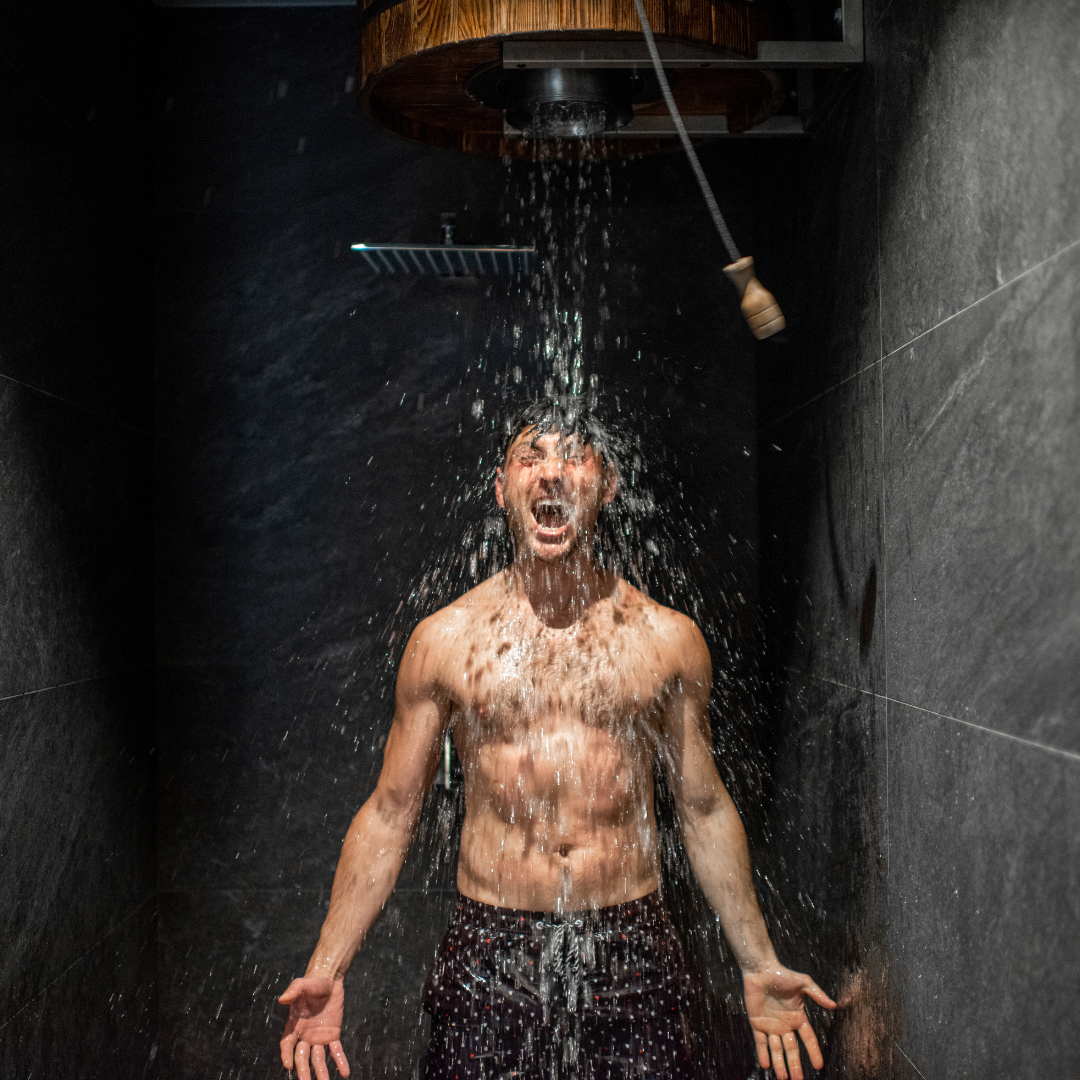
You can wash your hair without a shower using about a litre of water, a solid bar and a container to pour from. Wet the hair, lather at the scalp, and rinse in stages by pouring rather than running water. It takes two to three minutes and works at a campsite, in a van, at a beach tap, in a hostel with no hot water, or over a sink.
The other options, if you have no water at all or very little, are a rinse-only wash, a sink wash, or dry shampoo as a stopgap. Here is how each one works and when to use it.
- 1. The one litre method
- 2. Which method for which situation
- 3. Washing your hair in a sink
- 4. Washing in cold water
- 5. What if you have no water at all?
- 6. The minimum kit
- 7. Summary
- 8. Frequently asked questions
The one litre method
This is the core technique and it works almost anywhere. A solid bar matters here because there is no bottle to balance, spill or run out unpredictably, and you can hold it in one hand while you pour with the other.
- Fill a bottle or container with about a litre of water. Slightly warm if you have the option, but cold works.
- Tip your head forward and wet the hair with roughly a third of it. Pour slowly. Most of the water is wasted if you pour fast.
- Rub the bar directly on the scalp two or three times, or lather in your hands. Scalp only. The lengths get cleaned by what runs through them.
- Massage with fingertips for thirty seconds. This is what actually cleans.
- Rinse with the remaining two thirds, in two pours. Squeeze the hair out between pours. Squeezing removes more product than pouring does.
- Squeeze and towel dry. A microfibre towel does this far better than a normal one.
Use less product than you would in a shower. With limited rinse water, over-application is what leaves hair feeling coated, which is the same problem covered in why your hair feels waxy after switching to a shampoo bar.

Shampoo, body and face wash, all in one bar. Cooling, refreshing and designed for those always on the go.
Which method for which situation
| Situation | Method | Water needed | Time |
|---|---|---|---|
| Campsite with a tap | One litre method at the tap | About 1 litre | 3 minutes |
| Van or car, no facilities | One litre method, outside or over a bowl | About 1 litre | 3 to 5 minutes |
| Hostel with a sink only | Sink wash, head under the tap | Running water | 3 minutes |
| After surfing, beach shower | Rinse first, then a quick lather | Whatever the shower gives | 2 minutes |
| Cold water only | Shorter contact, focus on the scalp | About 1 litre | 3 minutes |
| Almost no water | Rinse only, no product | Half a litre | 2 minutes |
| No water at all | Dry shampoo or a damp cloth on the scalp | None | 2 minutes |
Washing your hair in a sink
Easier than it sounds if the sink has any depth at all. Lean forward, wet the hair under the tap in sections, lather at the scalp, then rinse in sections with the tap running gently. Longer hair is the harder case, and the trick there is to work in halves rather than trying to get all of it under at once.
If the sink is shallow, fill it, dunk and rinse, then drain and refill for a second rinse with clean water. Two changes of water beats one, and it uses less than you would think.
Washing in cold water
Cold water cleans, it just does less of the work for you. Warm water helps dissolve oils, so in cold water you need slightly more contact time and slightly more massaging at the scalp, not more product.
Two practical notes. Lather the bar in your hands first, because cold water and a cold bar produce very little foam if you go straight to the scalp. And expect it to feel like less is happening: hair still gets clean, there is simply less lather to reassure you.
Cold outdoor showers are the normal case after a session in the sea, which is covered in saltwater, chlorine and sun.

Shampoo, body and face wash, all in one bar. Keep your hair and skin healthy on the go. Monoï-infused scent with a touch of vanilla. Designed for those always on the go.
What if you have no water at all?
Then you are managing rather than washing, and that is a legitimate thing to do for a couple of days.
- Dry shampoo or cornflour. Absorbs oil at the roots. Apply a small amount, leave it a minute, brush it through thoroughly. Too much leaves a visible cast.
- A damp cloth on the scalp. Wipe along the partings. Removes a surprising amount of oil and sweat for almost no water.
- Brush properly. Distributes oil off the roots and along the lengths, which is what makes hair look greasy in the first place.
- Change the parting or tie it back. Not cleaning, but it buys a day.
Dry shampoo is a stopgap, not a substitute. Used for days on end it builds up at the scalp, which tends to make the next proper wash harder rather than easier.
The minimum kit
Four things cover every situation on this page.
| Item | Why | Weight |
|---|---|---|
| Solid 3-in-1 bar | Hair, body and face, no bottle to spill or balance | 80 g |
| 1 litre bottle or collapsible container | Pouring gives control that a tap does not | 50 to 150 g |
| Microfibre towel | Removes far more water than cotton, dries fast | 200 g |
| Wide tooth comb | Detangles wet hair without a mirror | 20 g |
A solid bar earns its place here specifically because there is nothing to leak in a bag that is already full of damp things, and because you can use one product for hair, body and face instead of balancing three bottles on a wet ledge.
Shampoo, body and face wash, all in one bar. Cooling, refreshing and designed for those always on the go.
Summary
A litre of water, a bar and something to pour from will wash your hair properly almost anywhere. Wet, lather at the scalp, rinse in two or three stages and squeeze between them. Use less product than in a shower, expect less lather in cold water, and treat dry shampoo as a stopgap rather than a solution. The technique is easy, the kit is small, and it takes about three minutes.
Frequently asked questions
How do you wash your hair without a shower?
Fill a container with about a litre of water. Use a third to wet the hair, lather a solid bar at the scalp, massage for thirty seconds, then rinse with the remaining two thirds in two pours, squeezing the hair out between them. It takes about three minutes.
How much water do you need to wash your hair?
About a litre is enough for short to medium hair using the pouring method. Long or thick hair may want a litre and a half. Pouring uses far less than a running shower because none of it is wasted while you lather.
Can you wash your hair in cold water?
Yes. Cold water cleans, it just dissolves oils more slowly, so give it a little more contact time and more scalp massage rather than more product. Lather the bar in your hands first, because cold water produces very little foam otherwise.
Is dry shampoo a substitute for washing?
As a stopgap for a day or two, it works by absorbing oil at the roots. It is not a substitute over longer periods, because it builds up at the scalp and makes the eventual proper wash harder.
What is the best soap for camping and van life?
A solid 3-in-1 bar, because it covers hair, body and face in one item, there is no bottle to leak into a bag of damp kit, and you can hold it in one hand while pouring water with the other.
How do you wash your hair in a hostel sink?
Lean forward and wet the hair in sections under the tap, lather at the scalp, then rinse in sections. If the sink is shallow, fill it, dunk and rinse, then drain and refill for a second clean rinse.
One bar covers all of it
Shampoo, body and face wash in one 80g bar. Nothing to leak in a bag of wet kit, no liquid limits at the airport, and 30 to 60 washes per bar.
Travel with Rinsed™ →30 day money back guarantee, no questions asked.
Alexandre
Founder @Rinsed™
Hey, I’m Alexandre! I started Rinsed™ for people like myself: sporty, hardworking and always on the go. Check out our bars!