
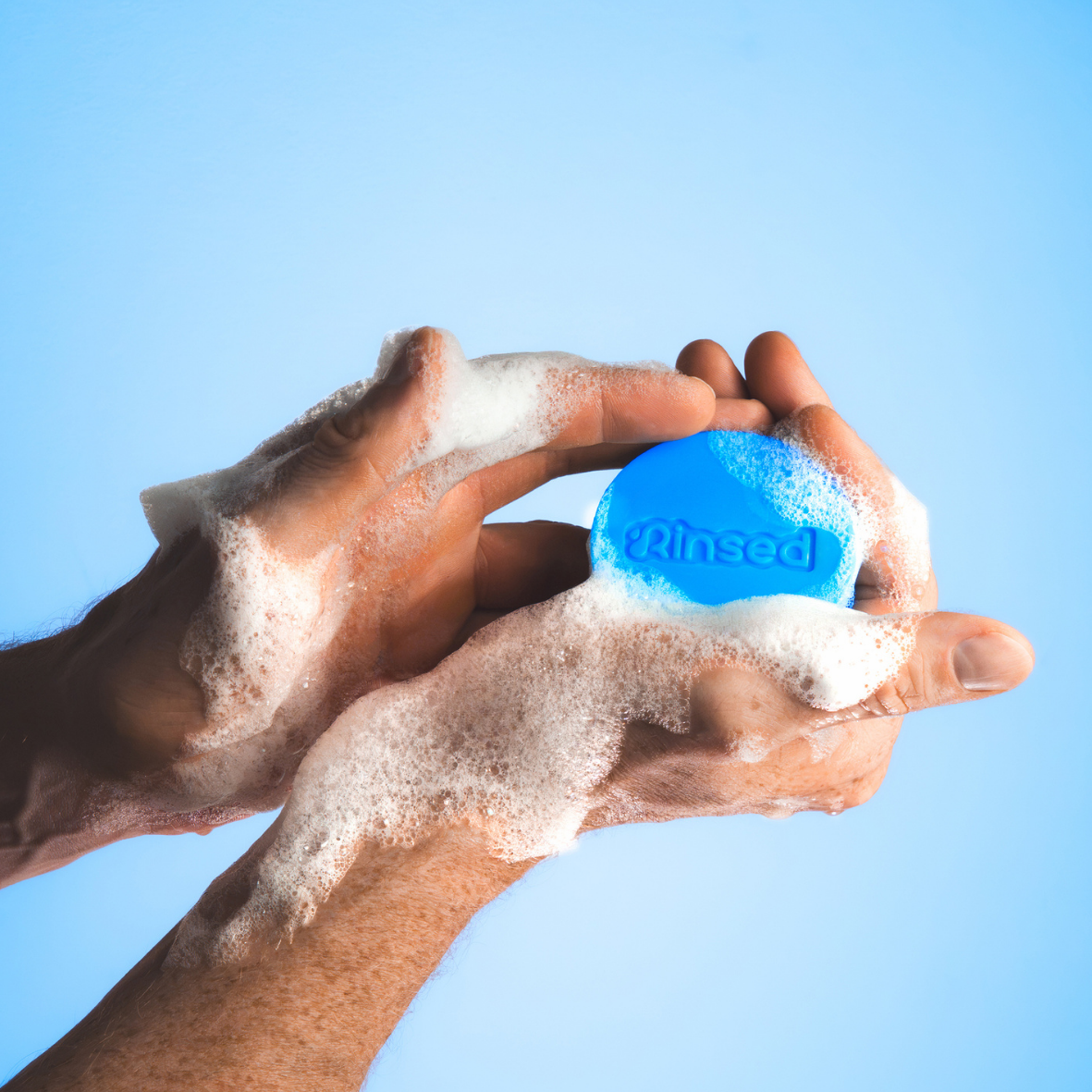
Bar soap is hygienic in normal use. Bacteria can live on a wet bar, but the practical question is whether they transfer to you and make you ill, and in ordinary household and personal use the answer is that this is not a meaningful risk. Soap works by lifting oils and microbes off your skin so they rinse away, and the rinsing takes the bar's own surface population with them.
The worry is understandable and it is very effectively marketed to. This guide separates what is actually true from what is sales copy for liquid soap, and covers the situations where a shared bar genuinely is worth avoiding.
- 1. Does bar soap harbour bacteria?
- 2. Four things people believe that are not quite right
- 3. When a shared bar genuinely is worth avoiding
- 4. How to keep a bar clean and lasting
- 5. Bars in hostels, campsites and shared showers
- 6. Is liquid soap actually more hygienic?
- 7. Summary
- 8. Frequently asked questions
Does bar soap harbour bacteria?
Yes, and so does almost every surface in your bathroom. A wet bar of soap sitting in a damp dish is a place where bacteria can survive. That much is not in dispute and it is what the alarming headlines are built on.
The part that gets dropped is what happens next. Washing is not a static process. You wet the bar, you lather, and running water carries the surface layer away. That is the same mechanism that cleans your hands, applied to the soap itself.
This question has been studied since at least the 1980s, and the general finding across that work is that transfer of bacteria from bar soap to a user during normal washing is negligible. If you want a citation for your own reading rather than taking our word for it, search for research on bacterial transfer from contaminated bar soap during handwashing, which is where this literature sits.

Shampoo, body and face wash, all in one bar. Cooling, refreshing and designed for those always on the go.
Four things people believe that are not quite right
| The claim | What is actually the case |
|---|---|
| Bar soap spreads illness between people | In normal domestic and personal use, transfer during washing is negligible |
| Liquid soap is inherently more hygienic | Pump bottles have their own contamination issues, particularly refilled ones |
| A bar is dirty because it looks slimy | Slime is softened soap from sitting in water, not a health hazard, though it wastes the bar |
| Antibacterial soap is needed to be safe | For everyday washing, ordinary soap and proper technique is the widely accepted advice |
The last one is worth dwelling on. What actually determines how clean your hands are is how long and how thoroughly you wash them, not whether the soap arrived as a solid or a liquid.
When a shared bar genuinely is worth avoiding
There are real situations, and they are narrower than the marketing implies.
- Healthcare settings. Hospitals and clinics use liquid or foam dispensers for good infection control reasons, and those reasons do not transfer to your bathroom at home.
- Someone in the household has a skin infection. Use separate bars, or liquid, until it clears.
- Open wounds. Do not share any washing product directly.
- A bar sitting in standing water in a shared shower. Not because it will make you ill, but because it is unpleasant and the bar dissolves.
For everything else, a bar in your own bathroom, or your own bar in a hostel, is fine. If you are uneasy about a shared bar in a communal shower, the simple answer is to carry your own, which is what most people travelling with a bar are doing anyway.
How to keep a bar clean and lasting
Every one of these is about keeping the bar dry between uses, which solves the hygiene worry and the mushiness problem at the same time.
- Rinse the bar after use. Two seconds under the water before you put it down.
- Let it drain and dry. A draining dish, a slatted holder or a soap saver. Not a flat puddle-collecting dish.
- Keep it out of the direct spray. A bar in the path of the shower slowly washes itself down the drain.
- Do not seal it wet in a tin. A closed container plus a wet bar is how you get a soft, sticky mess. Let it dry first.
- Give each person their own bar if that feels better. They are small and it costs nothing to do.
Full detail on storage, including travel, is in how to store a soap bar so it does not turn to mush.

Shampoo, body and face wash, all in one bar. Keep your hair and skin healthy on the go. Monoï-infused scent with a touch of vanilla. Designed for those always on the go.
Bars in hostels, campsites and shared showers
This is where the question comes up most, and the practical answer is straightforward: carry your own and keep it dry. A bar in a shared bathroom is your bar, used by you, so the shared part of the problem disappears.
The real travel problem with a bar is not hygiene, it is storage. A wet bar going straight into a wash bag makes a mess of everything around it, which is why a tin or a draining case matters more on the road than at home. Let it dry as much as you can before packing, and keep it in something that breathes if you are packing it damp.
A bar also has the advantage of not being a liquid at airport security, covered in hand luggage only: what toiletries you can actually take.
Is liquid soap actually more hygienic?
Not automatically, and refilled dispensers are a known weak point. Topping up a pump bottle rather than replacing it can introduce contamination into the container, where it then sits in a warm, wet environment. Sealed, single-use dispensers avoid this, which is why healthcare settings use them and why hospital practice is not a good guide to domestic bathrooms.
The other thing rarely mentioned in this comparison is the pump itself. Everybody in the house touches it with unwashed hands, every time, which is precisely the surface a bar sceptic ought to worry about.
If you are weighing formats for reasons beyond hygiene, our shampoo bar versus liquid comparison goes through the practical trade-offs.
Shampoo, body and face wash, all in one bar. Cooling, refreshing and designed for those always on the go.
Summary
Bacteria can live on a wet bar of soap, and in normal use they do not transfer to you in a way that matters. The technique and duration of your washing determines how clean you get, not the format of the soap. Rinse the bar, let it drain, keep it out of standing water and carry your own when you travel. Reserve the caution for healthcare settings, skin infections and open wounds.
Frequently asked questions
Is bar soap hygienic?
Yes, in normal use. Bacteria can survive on a wet bar, but research going back decades has found that transfer to the user during ordinary washing is negligible. Rinsing is what makes the difference, and it cleans the bar at the same time as your hands.
Does bar soap hold germs?
A wet bar can carry bacteria on its surface, like most damp bathroom surfaces. The practical question is whether they transfer during washing, and in everyday use they do not in any meaningful quantity. Keeping the bar dry between uses reduces even that.
Is liquid soap more hygienic than bar soap?
Not inherently. Refilled pump dispensers can become contaminated inside the bottle, and everyone touches the pump with unwashed hands. Sealed dispensers are used in healthcare for infection control reasons that do not apply to a home bathroom.
Should I share a bar of soap?
In a household, generally fine. Use separate bars if someone has a skin infection or an open wound, and avoid shared bars in healthcare settings. When travelling, carrying your own is simplest and avoids the question.
Why does my soap go slimy?
It is sitting in water. Softened soap is wasted soap rather than a health problem, but it does mean the bar disappears far faster. A draining dish and keeping it out of the shower spray fixes it.
Is antibacterial soap better for everyday washing?
For everyday handwashing, ordinary soap used properly is the widely accepted advice. How long and how thoroughly you wash matters much more than whether the soap is labelled antibacterial.
Your own bar, wherever you are
Shampoo, body and face wash in one 80g bar. Nothing to leak, no liquid limits at the airport, and 30 to 60 washes per bar.
Travel with Rinsed™ →30 day money back guarantee, no questions asked.
Alexandre
Founder @Rinsed™
Hey, I’m Alexandre! I started Rinsed™ for people like myself: sporty, hardworking and always on the go. Check out our bars!