



If you carry one 3-in-1 bar, you need one case. If you carry two or more bars, such as a shampoo bar and a conditioner bar, give each its own case or use a double case with a divider, because damp bars sharing a tin tend to stick together and swap scents.
Solid toiletries multiply quickly. A shampoo bar, a conditioner bar, a body bar, maybe a face bar, and suddenly your wash bag holds four slippery blocks and one tin. For the basics of what a case does, start with our complete guide to carrying a bar. Here we stick to the question of how many. Sources are listed at the end.
Key facts
- EU rules require a cosmetic's list of ingredients to be set out in descending order of weight.
- Under EU rules, the list of ingredients may be printed on the packaging alone rather than on the product itself.
- For soap and similar small products, EU rules allow the ingredient list to sit on a notice close to where the product is sold.
- In EU hand luggage, no liquid container may hold more than 100 ml, and liquids go in one transparent bag of up to 1 litre.
- US environmental guidance says the key to mould control is moisture control.
Can you put two bars in one tin?
You can, if both bars are fully dry and the trip is short. Two damp bars pressed together in a closed tin tend to stick, soften where they touch and pick up each other's scent. For anything longer than a day, or any bar used that morning, separate them.
Think of two chocolate bars in a warm pocket. Dry, they slide apart; soft, they become one lump. On a weekend away, that can mean prising your shampoo bar off your body bar in a hotel bathroom on Sunday morning.
Water is the real problem. A closed tin has nowhere to send it, and two wet bars bring twice as much. US environmental guidance says the key to mould control is moisture control, and advises drying wet items completely. Two bars sharing a sealed space for days is the opposite.
So if you share a tin, keep it to two dry bars on a day trip, out of the tin as soon as you arrive. Why a closed case keeps a bar wet, and how to dry one before packing, is in does a soap case need holes.
Is a double soap case worth it?
A double soap case, with two compartments or a divider, is worth it if you always travel with the same two bars, such as shampoo and conditioner. It keeps them apart in one object. It is not worth it if you carry one bar, or if your two bars are very different sizes.
One shell, two rooms: you open one lid and both bars are there without touching. The catch is fit. A big body bar and a small round conditioner bar may not sit well in two equal halves, and a divider doesn't stop water moving: if one bar goes in wet, the other side can still get damp. Matching a case to a bar's shape is covered in what size soap case do you need.
| Option | Works well for | Watch out for |
|---|---|---|
| Two bars in one tin | Dry bars on a day trip | Sticking and swapping scent once damp |
| One tin per bar | Longer trips; bars of different sizes | More items to pack |
| Double case with a divider | The same two bars on every trip | Both halves must fit; water can reach the other side |
| One tin plus a soap bag | One bar used daily, another now and then | A damp bag wets whatever it touches |
| One 3-in-1 bar in one case | Hand luggage, gym bags, fewer items | Not the answer if you want a separate conditioner bar |
If a soap bag for the second bar appeals, the trade-offs are in soap case, soap bag or ziplock.
Do you need a case for a shampoo and conditioner bar?
Ideally one case each, or one double case. A shampoo bar and a conditioner bar do different jobs and are often used back to back, so both tend to be damp when you pack. Kept apart, neither smears onto the other. If one bar does hair, body and face, one case is enough.
Picture a ten-day trip with hand luggage only. You wash and condition your hair, then pack straight after breakfast. Two bars, both still damp. Sharing a tin, by day three you may struggle to tell where one ends.
That's the honest case for two tins: if a conditioner bar is part of your routine, plan for two containers. Whether one bar can do the job of several products is a separate question, weighed up in shampoo bar, soap bar or 3-in-1.
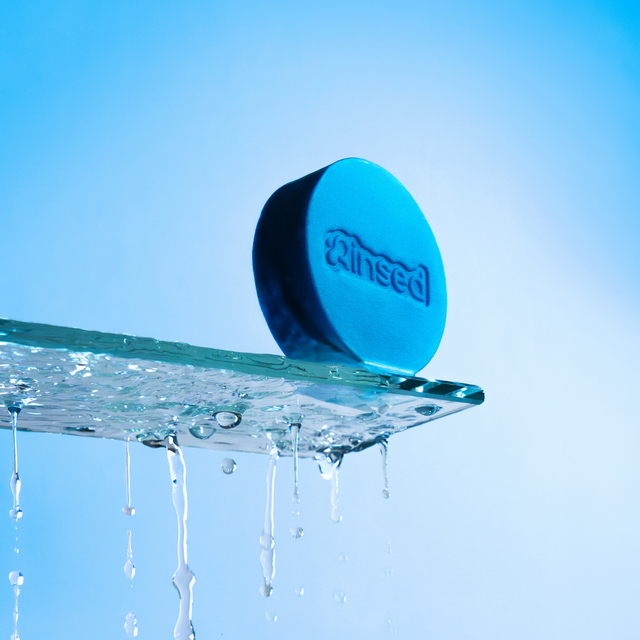
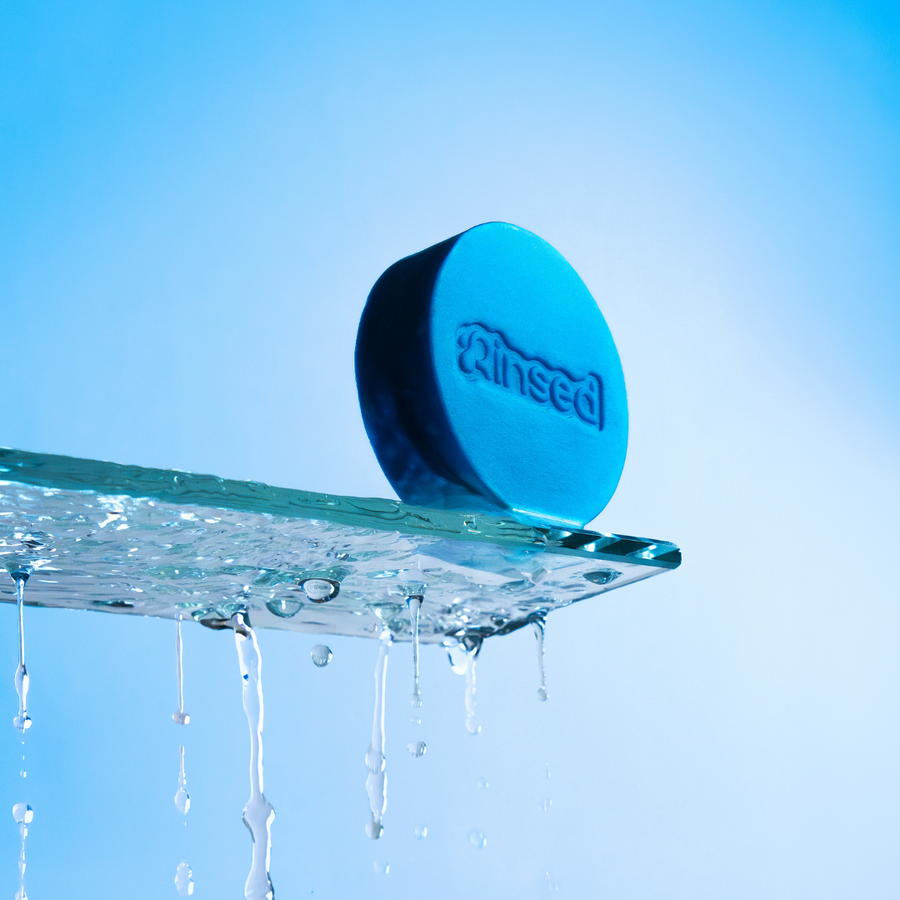
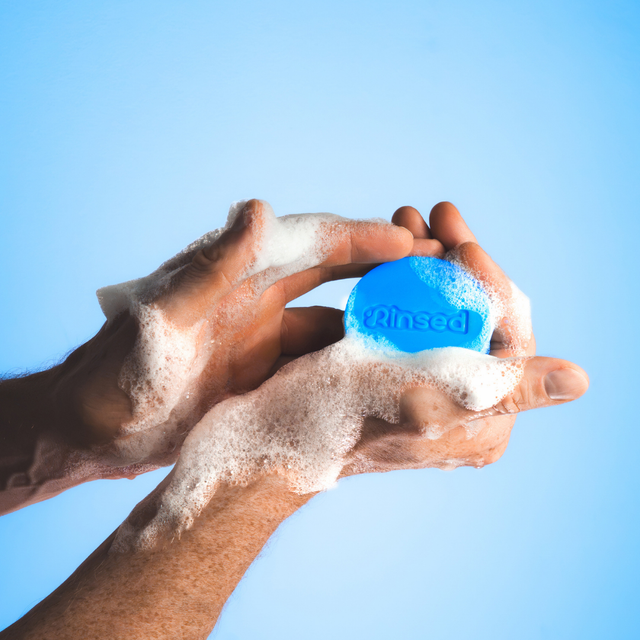
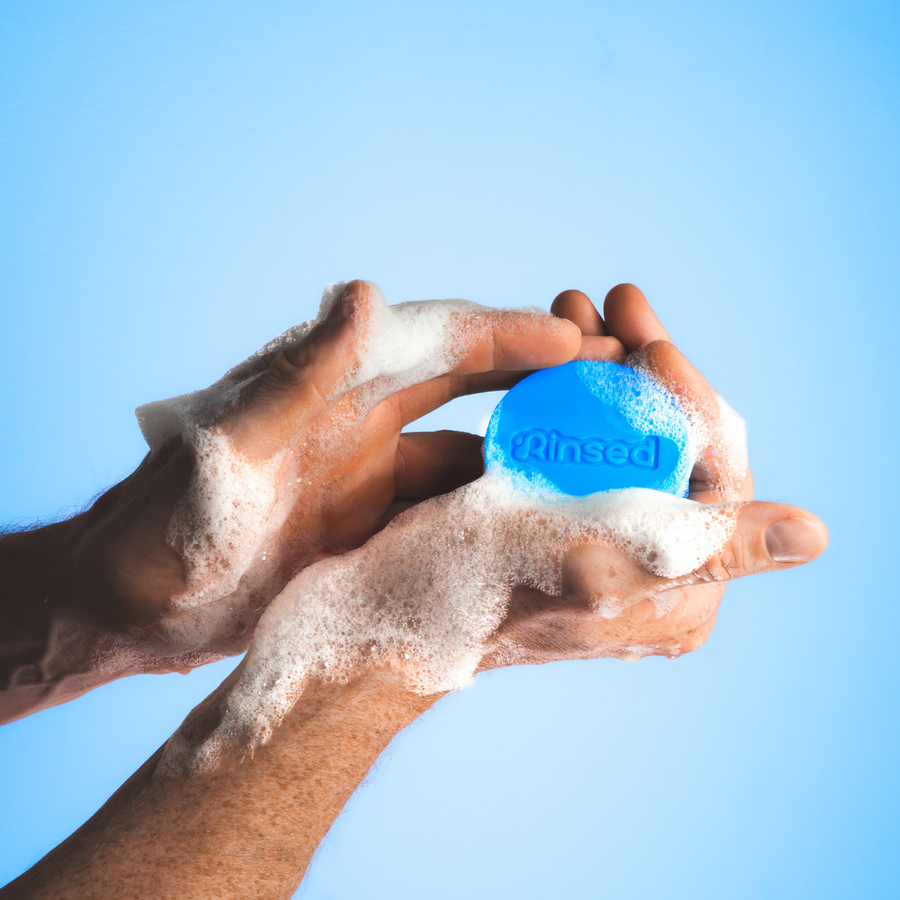
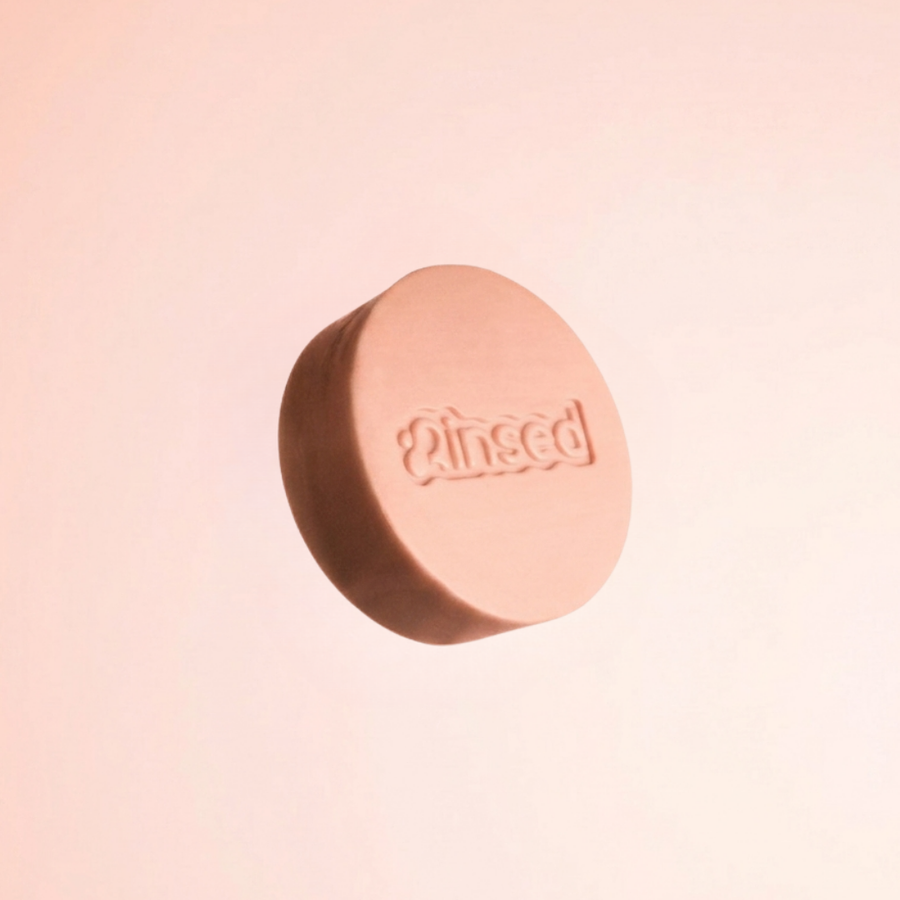
Our own bars take the other route. A Rinsed bar is a syndet bar, with Sodium Cocoyl Isethionate as the first ingredient and no saponified oils, and it is one solid 3-in-1 bar for hair, body and face. One bar, one case. It won't replace a conditioner bar if you rely on one.

Shampoo, body and face wash, all in one bar. Cooling, refreshing and designed for those always on the go.
Whichever route you take, the rule for each bar stays the same: dry before the lid goes on.
How do you tell several bars apart once they are unwrapped?
Label the tins, not the bars. Under EU rules, a cosmetic's ingredient list may appear on the packaging alone, so once you throw the wrapper away, the information goes with it. A strip of tape on each lid, plus a photo of each wrapper on your phone, keeps it with you.
EU rules require a list of ingredients on cosmetics, in descending order of weight. For soap and similar small products, that list may even sit on a notice close to where the product is sold. Either way, the bar itself rarely tells you. On a crowded hostel windowsill, two pale bars look very much alike.
A simple system works: one tin per bar, a word on each lid (shampoo, conditioner, body), and a photo of each wrapper before it goes in the bin. That photo helps if you ever need to check an ingredient, as our guide to fragrance allergens on the label explains.
On labels: every Rinsed bar contains Parfum. If you avoid fragrance, pick something else, and keep it in a tin of its own.
How do you carry several bars with hand luggage only?
Carry as few bars as your routine allows, give each one a case or a dry wrapping, and pack them in your wash bag rather than your liquids bag. Solid bars are not liquids, so they don't count towards the 100 ml containers, but each extra bar still adds weight and bulk.
EU rules say no liquid container in hand luggage may hold more than 100 ml, and liquids travel in one transparent bag of up to 1 litre. The details for solid toiletries at security are in can you take soap on a plane.
For a carry-on traveller, the number of bars is the real choice. Four bars in four tins take a surprising amount of room in a small cabin bag. Cutting a piece off each for a short trip helps, and so does asking which bars you would actually miss. For the rest of a cabin bag, see hand luggage only toiletries.
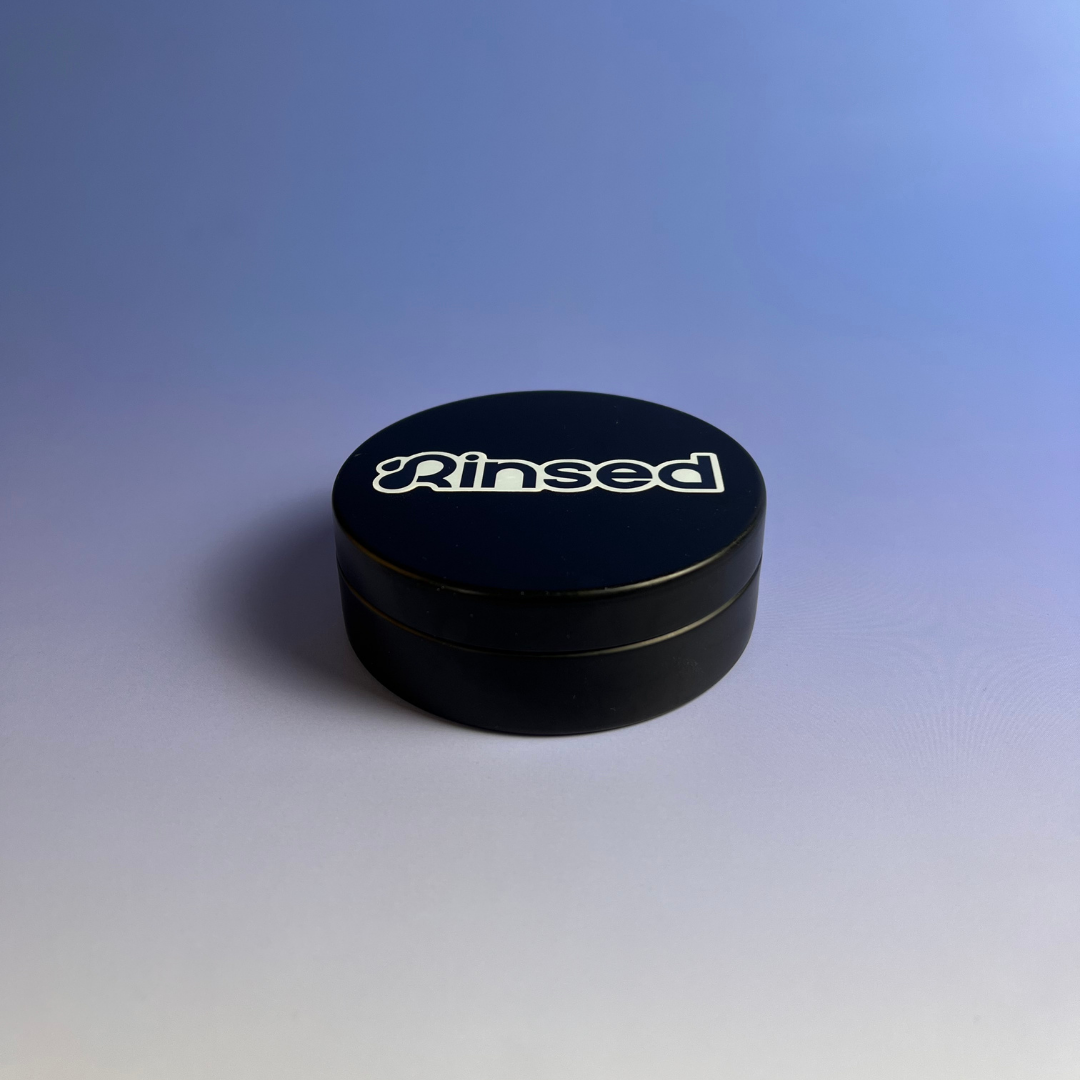
If you go down to one bar, our metal travel soap case is made for that. The Rinsed case is black, made of aluminium, weighs 20 g and holds one Rinsed bar, for a gym bag or hand luggage. A two-bar routine still needs a second container. Let the bar dry before you close it, and at home keep the bar out of the case so it can dry between showers.

A black aluminium case for one Rinsed™ bar. Weighs 20 g and keeps the bar tidy in a gym bag or hand luggage.
The packing routine itself, from cutting the bar to wrapping it on the last morning, is in how to travel with a shampoo bar.
Why do soap bars stick together or swap scents?
A wet bar has a soft, slippery surface. Press two together in a closed tin and the soft layers can bond or smear into each other. Scented bars kept in close contact for days can also leave some of their smell on each other. Dry bars, kept apart, avoid both.
This is an everyday observation rather than a measured fact. Think of a gym bag after a Tuesday session, with a minty body bar and an unscented face bar sharing a tin overnight. The next morning, both may smell of mint. If you chose a bar for what isn't in it, don't let it share a tin with one that has it.
The same goes for two people travelling together: a bar and a case each keeps scents, and drying times, separate. Our formula comes in two scents, Minty Cactus and Blossom Blast, so a pair can take one each and never mix them up.

Shampoo, body and face wash, all in one bar. Keep your hair and skin healthy on the go. Monoï-infused scent with a touch of vanilla. Designed for those always on the go.
If bars have already fused, let them dry in the open on a dish or folded towel before you separate them; a firm bar comes apart more cleanly than a soft one. Then rinse the tin, because softened soap leaves residue in the corners. Our step-by-step is in how to clean a soap case.
Summary
One bar, one case is the simplest rule. Two dry bars can share a tin for a day, but damp bars in a closed space tend to stick and swap scents, so give each bar its own case, or use a double case if you always carry the same pair.
A 3-in-1 bar means one case; a shampoo and conditioner routine usually means two. Label the tins, photograph the wrappers, carry only the bars you really use, and let every bar dry before the lid goes on.
Frequently asked questions
Can two soap bars go in one tin?
Yes, if both are fully dry and the trip is short. Damp bars pressed together in a closed tin tend to stick and pick up each other's scent. For longer trips, give each bar its own case.
What is a double soap case?
It is one case with two compartments or a divider, so two bars travel without touching. It suits people who always carry the same two bars, such as shampoo and conditioner, as long as both halves fit their bar.
Do a shampoo bar and a conditioner bar need separate cases?
Ideally, yes, or one double case. They are often used back to back, so both tend to be damp when you pack. Kept apart, neither smears onto the other.
How do you separate soap bars that have stuck together?
Let them dry in the open on a dish or a folded towel first, because a firm bar comes apart more cleanly than a soft one. Then rinse the tin to remove the residue.
Why does one soap bar smell of another?
Scented bars kept in close contact for days, especially when damp, can leave some of their smell on each other. Keep a bar you chose for being unscented in a tin of its own.
How do you tell unwrapped soap bars apart?
Label the tins, not the bars: a strip of tape with a word on each lid works. Under EU rules the ingredient list may be on the packaging alone, so photograph each wrapper before you throw it away.
Do several soap bars count as liquids in hand luggage?
No. Solid bars are not liquids, so they go in your wash bag rather than the transparent liquids bag. EU rules limit liquids in hand luggage to containers of 100 ml at most, in one bag of up to 1 litre.
Does the Rinsed case hold two bars?
No. The Rinsed case is black, made of aluminium, weighs 20 g and holds one Rinsed bar. A routine with two bars needs a second container.
Sources
The facts in this article are based on the sources below, checked in October 2026.
- Regulation (EC) No 1223/2009 on cosmetic products. European Parliament and Council, 2009.
- Luggage restrictions. Your Europe, European Union, 2026.
- A Brief Guide to Mold, Moisture and Your Home. US Environmental Protection Agency, 2026.