


Soap tins rust because many are steel underneath, and steel rusts where water and oxygen reach it, usually at a scratch, dent or seam. Aluminium tins don't rust, though they can corrode. Either way, the fix is to keep the tin dry.
Open an old soap tin and you might find orange spots on the rim or a dull grey patch in the base. It's easy to blame the bar, but most of it comes down to the metal, a bit of damage and water that sat too long. New to carrying a bar? Start with our complete guide to travel soap cases.
Key facts
- Rust is a hydrated form of iron(III) oxide, and rusting requires both oxygen and water.
- Iron rusts faster in contact with salt water than in fresh water.
- Tinplate is low carbon mild steel coated on both sides with tin.
- Unlike iron rust, the oxide film on aluminium does not come away to expose fresh metal underneath.
- In neutral solutions, roughly between pH 4 and 9, the oxide film on aluminium has very low solubility.
- Bar soap is made with sodium hydroxide, and soap is alkaline.
Why does a soap tin rust?
A soap tin rusts because it contains iron. Rust is a hydrated iron oxide, and it forms when iron or steel meets both oxygen and water. Many tins are tinplate, which is thin steel with a coating of tin, so wherever that steel is exposed and stays wet, rust can start.
A chemistry textbook puts it simply: rusting needs oxygen and water, and iron rusts faster in salt water than in fresh. A materials paper describes the tin coating as what gives the steel its corrosion resistance. Think of a Tuesday at the gym: the dripping bar goes in the tin and the water sits there until Thursday. After a surf, add salty kit; our surf trip wash kit covers the rest of that bag.
| Kind of tin | Can it rust? | Where trouble starts |
|---|---|---|
| Tinplate (steel coated with tin) | Yes, where the steel underneath is exposed | Scratches, dents, pinholes and cut edges |
| Painted or lacquered steel | Yes, once the coating is chipped | Chips on the rim and lid |
| Stainless steel | It resists corrosion through a chromium-rich oxide film | Rust stains from contact with ordinary carbon steel |
| Aluminium | No, because rust is iron oxide; it can corrode in other ways | Standing water, salt and a damaged surface |
For weight and cleaning, see our comparison of metal, plastic and silicone cases.
Why does rust start at a scratch or a dent?
The tin coating only protects the steel while it is unbroken. Once a scratch, dent or pinhole exposes the steel, the steel becomes the part that corrodes, and the rust can creep under the tin around it. That's why rust on a tinplate tin almost always starts at damage, a seam or the rim.
A materials science course explains that tin protects iron only if it's scratch free: at a scratch, tin and steel form a tiny electrical cell in which the steel corrodes and undercuts the tin around it. A chemistry textbook adds that even a pinhole in a tin can rusts very quickly. Picture a tin that rattled around a rucksack for ten days with hand luggage only and came home with a dented lid. That dent is where to look first.
Does aluminium rust or corrode?
Aluminium doesn't rust, because rust is iron oxide and aluminium contains no iron. It forms its own thin oxide film that protects the surface and reforms when scratched. It can still corrode under certain conditions, for example as small pits where water containing chloride sits on the surface.
An aluminium handbook says aluminium resists the progressive oxidation that makes steel rust away, and an industry body adds that the film reforms instantly if scratched and that aluminium corrodes only under certain conditions. A corrosion review explains that between roughly pH 4 and 9 the film barely dissolves, and that pits need chloride ions and acidity to develop. In everyday terms: a clean, dry tin is fine in a wash bag; one with salty water pooled in a corner for days may show dull spots.
How do you stop a soap tin rusting?
Keep water out of it. Let the bar dry before it goes in, open the tin as soon as you arrive, wipe out any pooled water, and store the tin empty and open between trips. Avoid scouring pads and anything that scratches the coating, and don't keep a closed tin somewhere that swings between hot and cold.
- Dry the bar first. A bar that has stood in the air for an hour brings far less water in.
- Wipe, don't scour. A soft sponge keeps the coating whole.
- Watch for condensation. A code of practice for canned food warns that big temperature swings make moisture condense on cans and lead to rusting. A tin moved from a cold car boot into a warm room gets the same treatment.
The drying routine for the bar itself is in how to travel with a shampoo bar, and whether holes help is covered in ventilated versus closed cases.
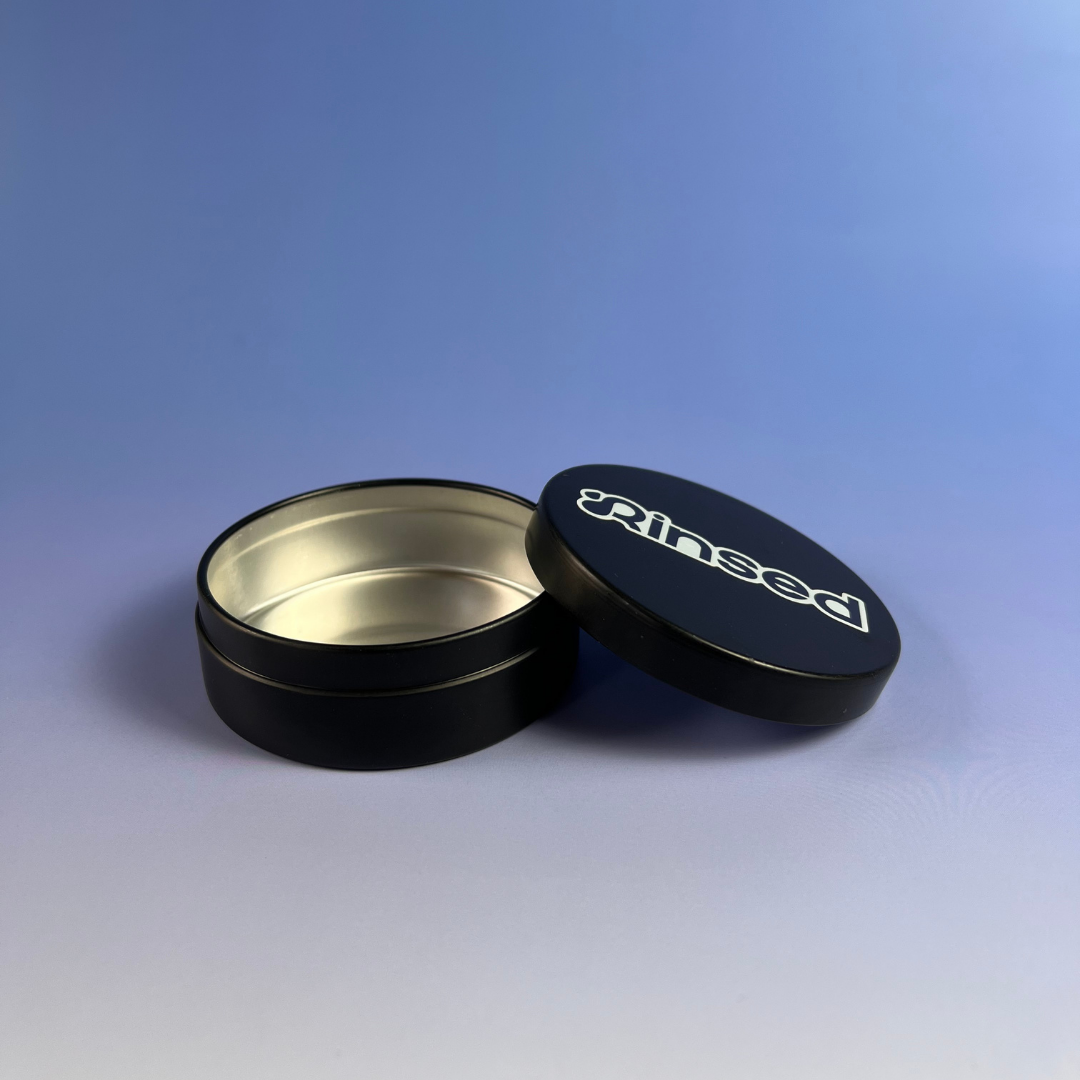
The same habits apply to our metal travel soap case. The Rinsed case is black, weighs 20 g, holds one Rinsed bar and is made for a gym bag or hand luggage. We make no promise about corrosion either way, so treat it like any metal tin: let the bar dry before you close it, and at home keep the bar out of the case.

A black aluminium case for one Rinsed™ bar. Weighs 20 g and keeps the bar tidy in a gym bag or hand luggage.
So much for the metal. What about the soap?
Does soap itself damage a metal tin?
It can play a part. Traditional soap is alkaline, and aluminium's protective film is most stable in roughly neutral conditions. Strong alkalis such as sodium hydroxide dissolve aluminium. Soapy residue is far weaker than that, and we found no source measuring its effect on tins, so treat it as one more reason to rinse and dry.
A dermatology reference explains that soap is alkaline and that bar soap is made from fat and oil with sodium hydroxide. A university chemistry reference notes that aluminium dissolves in sodium hydroxide. Next to the neutral range of roughly pH 4 to 9, you can see why alkaline water lying in an aluminium tin isn't ideal.
Keep it in proportion: a soapy film is not lye, and none of our sources tested residue on a real tin. Just don't leave it pooled for days; our step-by-step is in how to clean a soap case.
What are the stains inside a soap tin?
Orange or brown marks at a scratch, seam or rim are usually rust on a steel tin. A white crust is most often dried soap. Dull grey spots on aluminium can be corrosion. Dark spots that smell musty may be mould, which needs damp and can leave stains.
Stainless steel is a special case: a stainless steel guide explains that rust stains on it often come from contact with ordinary carbon steel, so a tin packed next to steel tent pegs can pick up marks that aren't its own rust. For dark spots, US environmental guidance says the key to mould control is moisture control and that mould may cause staining; a musty tin needs the full wash in our guide to cleaning a soap case.
The white crust is dissolved bar that dried where it pooled, and every bar leaves some, ours included. Rinsed bars are syndet bars, with Sodium Cocoyl Isethionate first and no saponified oils (our syndet bar explainer covers what that means), and we're not claiming that makes any difference to your tin. It's one 3-in-1 bar for hair, body and face, in Minty Cactus and Blossom Blast.

Shampoo, body and face wash, all in one bar. Keep your hair and skin healthy on the go. Monoï-infused scent with a touch of vanilla. Designed for those always on the go.
Whatever bar you carry, a dry bar leaves less crust behind.
What should you do with a rusty soap tin?
For a few light spots, wash the tin, dry it completely and keep using it with the habits above. If rust spreads along the seams, crumbles into the base or stops the lid closing, replace the tin. Washing won't bring back metal that rust has already eaten.
On tinplate, once the steel is exposed, corrosion can keep spreading under the tin, so a rusty seam usually gets worse. Before you buy another, ask whether you need a tin at all. At home a draining dish beats any closed box, as how to store a soap bar explains. On a long walk, a soap bag is lighter and lets the bar dry; see soap case, soap bag or ziplock.
If a hard case is still what you want for a gym bag or hand luggage, ours holds one Rinsed bar. Let the bar dry before you close it.
A black aluminium case for one Rinsed™ bar. Weighs 20 g and keeps the bar tidy in a gym bag or hand luggage.
Training most days? See bar soap or shower gel at the gym.
Summary
Rust is iron oxide, so it affects tins with steel in them, starting where water and oxygen meet exposed steel at a scratch, dent or seam. Aluminium doesn't rust, but it can corrode when salty or alkaline water sits on it.
Prevention is the same for every tin: a dry bar, a dry tin and no scouring. Rust that spreads or stops the lid closing means it's time for a new one.
Frequently asked questions
Why is my soap tin rusting?
Many soap tins are tinplate, steel coated with tin. Rust forms where that steel meets oxygen and water, usually at a scratch, dent or seam. Closing the tin on a wet bar supplies the water.
Do aluminium soap tins rust?
No. Rust is iron oxide, and aluminium is protected by its own oxide film that reforms when scratched. Aluminium can still corrode under certain conditions, for example as small pits where salty water sits on it.
Can a stainless steel soap tin get rust spots?
It can show rust stains, often from contact with ordinary carbon steel rather than from the stainless steel itself. Packing it next to steel items is a likely cause.
Is soap bad for an aluminium tin?
Traditional soap is alkaline, and aluminium's protective film is most stable in roughly neutral conditions. Soapy residue is far weaker than the strong alkalis that dissolve aluminium, but rinse it out rather than leaving it for days.
How do you stop a soap tin rusting?
Let the bar dry before it goes in, open the tin when you arrive and store it empty and dry. Use a soft sponge, not a scouring pad, because scratches are where rust starts.
Are black spots in a soap tin rust?
Not usually. Rust tends to be orange or brown. Dark spots that smell musty may be mould, which needs moisture and can stain surfaces, so wash the tin and dry it fully.
Can you still use a rusty soap tin?
A tin with a few light spots can be washed, dried and kept in use. If rust spreads along the seams or stops the lid closing, replace it.
What is the white crust in a soap tin?
Usually dried soap: the bar dissolves a little in water left in the tin, and that dries into a crust. A rinse and a full dry remove it.
Sources
The facts in this article are based on the sources below, checked in October 2026.
- 22.7: Corrosion. ChemPRIME, Chemistry LibreTexts, accessed 2026.
- Code of Practice for the Prevention and Reduction of Inorganic Tin Contamination in Canned Foods (CAC/RCP 60-2005). Codex Alimentarius Commission, 2005.
- Characterization of tin-plated steel. Frontiers in Materials, 2023.
- Corrosion and environmental degradation: galvanic corrosion. Princeton University, MAE 324 course notes, accessed 2026.
- Aluminum and Aluminum Alloys. ASM International, via NIST Materials Data Repository, 2001.
- Aluminium properties. Australian Aluminium Council, 2024.
- Pitting corrosion of aluminum. Corrosion Science, 1999.
- Aluminium: reactions of elements. WebElements, University of Sheffield, accessed 2026.
- Soaps and cleansers. DermNet, 2024.
- Pickling and Passivating Stainless Steel. European Stainless Steel Development Association, 2007.
- A Brief Guide to Mold, Moisture and Your Home. US Environmental Protection Agency, 2026.