



A travel soap case is a small box or tin that carries a solid bar from your bathroom to a gym bag, a suitcase or a rucksack without it smearing over everything else. It is for carrying, not for storing: the bar still needs air and time to dry before it goes in.
If you've ever opened a wash bag to find a soft bar glued to your toothbrush, you know why people buy one. This guide is the overview, with a link to a longer article for each part. We'll also be honest about when a soap bag or a draining dish does the job better.
Key facts
- Aluminium weighs approximately one third as much as steel.
- Aluminium forms a thin oxide film on its surface that protects the metal underneath.
- In a study of soap products in use, 92 to 96% of bar soap samples carried bacteria, against 8% of liquid soap samples.
- US environmental guidance says the key to mould control is moisture control.
- At Schiphol, liquids in hand baggage may only be carried in containers of 100 ml at most, in one transparent 1-litre bag.
What is a soap case for?
A soap case keeps a solid bar in one place while you move it: from the shower to a gym locker, from your bathroom to a hotel. It protects the rest of your bag from a damp, slippery bar, and it protects the bar from being squashed. It is a carrier, not a home for the bar.
Think of the Tuesday evening after training. You've showered, the bar is still wet, and it has to go back in a bag with a phone charger and a clean T-shirt. With a case, nothing else gets soapy.
What a case can't do is dry the bar for you. A bar closed up wet stays wet until you open it again, so let it dry before the lid goes on. At home, a draining dish beats any case, and our guide on how to store a soap bar covers that side in full.
What kinds of soap case and soap tin are there?
Most fall into five groups: metal tins, hard plastic boxes, silicone cases, ventilated or draining cases, and soap bags made of mesh or fabric. They differ in weight, in how well they hold a damp bar, and in how much they let it breathe. None is best for every trip.
Here is the quick comparison. Apart from the aluminium facts, these are practical observations.
| Kind | What it is | Good at | Watch out for |
|---|---|---|---|
| Metal tin (aluminium or steel) | A rigid tin with a lid | Protecting the bar from knocks; aluminium weighs about a third as much as steel | A wet bar stays wet inside until you open it |
| Hard plastic box | A clip or snap box, often two halves | Easy to rinse out; rigid in a full bag | Bulkier than a tin for the same bar |
| Silicone case | A soft, flexible pouch or box | Squeezes into gaps in a packed bag | Soft sides offer less protection from being squashed |
| Ventilated or draining case | A box with holes or a raised grid inside | Letting water run off and some air in | Water can find its way out into your bag |
| Soap bag | A mesh or fabric pouch | Very light; lets the bar breathe and hang to dry | No protection for the rest of your wash bag |
A materials handbook says aluminium weighs about a third as much as steel and forms a thin oxide film that protects its surface. That describes the metal, not any particular tin, so look at the lid and finish too.
For the full material comparison, read metal, plastic or silicone. Torn between hard and soft? Read a case, a soap bag or a ziplock on the road.
Before you buy, check the fit: our guide to what size of soap case you need covers round, square and shampoo bars, and if you carry more than one bar, read whether two bars can share one case.
What is the best soap case for travel?
The best soap case for travel is the one that fits your bar snugly, weighs little, closes reliably in a moving bag and is easy to wipe out. Beyond that it depends on the trip: hand luggage and gym bags favour a rigid case, long hikes favour the lightest option.
Run through four questions before you buy:
- Does the bar fit? Too loose and it rattles; too tight and wet hands can't get it out.
- How much does it weigh? On a ten-day trip with hand luggage only, grams add up.
- Will it stay shut? A lid that pops open in a rucksack defeats the point.
- Can you clean it? Smooth corners wipe out more easily than ridges.
Then there's the question of holes. Holes let water out and air in; a closed case keeps everything in. That trade-off gets its own page: does a soap case need holes.
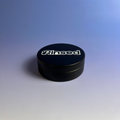
The Rinsed™ metal travel case is black, made of aluminium, weighs 20 g and holds one Rinsed bar. It is for carrying the bar in a gym bag or hand luggage. Let the bar dry before you close it, and at home keep the bar out of the case so it can dry between showers.

A black aluminium case for one Rinsed™ bar. Weighs 20 g and keeps the bar tidy in a gym bag or hand luggage.
If you rarely travel, you don't need a case at all: a draining dish does more for a bar than any box.
How do you use a soap tin so the bar survives the trip?
Let the bar dry before you close the tin, pack it last so it travels the shortest time, and take it out as soon as you arrive so it can dry in the open. A soft bar after a trip almost always comes down to water trapped with it.
Picture a hostel shower with no shelf. You wash, you have nowhere to leave the bar, so it goes straight back in the tin dripping. Fine for the walk back to your bunk, but open the lid once you're there and let it sit out. Leaving that morning? Give it breakfast time and blot it with a towel first.
Why bother? A bar in use picks up bacteria. A microbiology study of soap products in use found bacteria on 92 to 96% of bar soap samples, compared with 8% of liquid soap samples. The same study found the numbers on bar soaps were not high compared with those on hands, and that the bacteria kept changing rather than settling in. No reason to panic, just a reason to keep the bar dry and the case clean. Our article is bar soap hygienic goes into that properly.
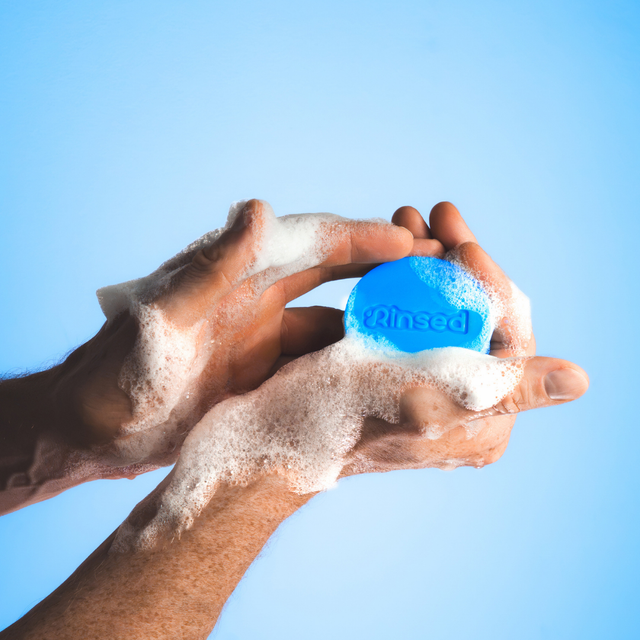
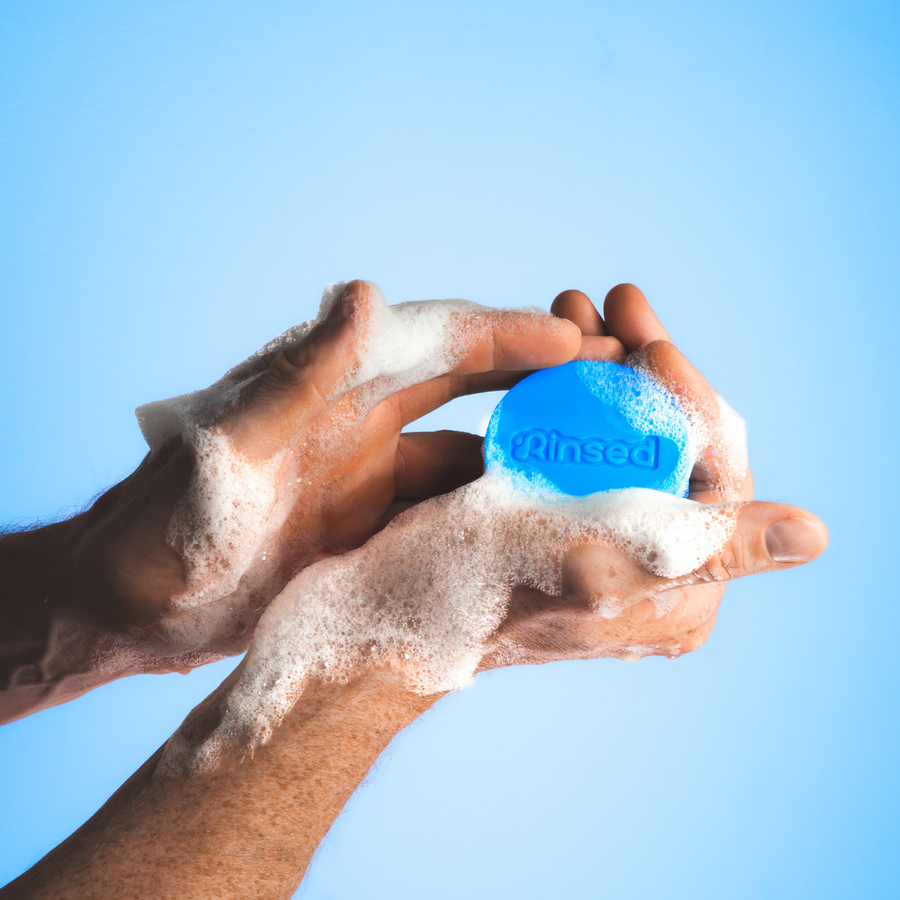
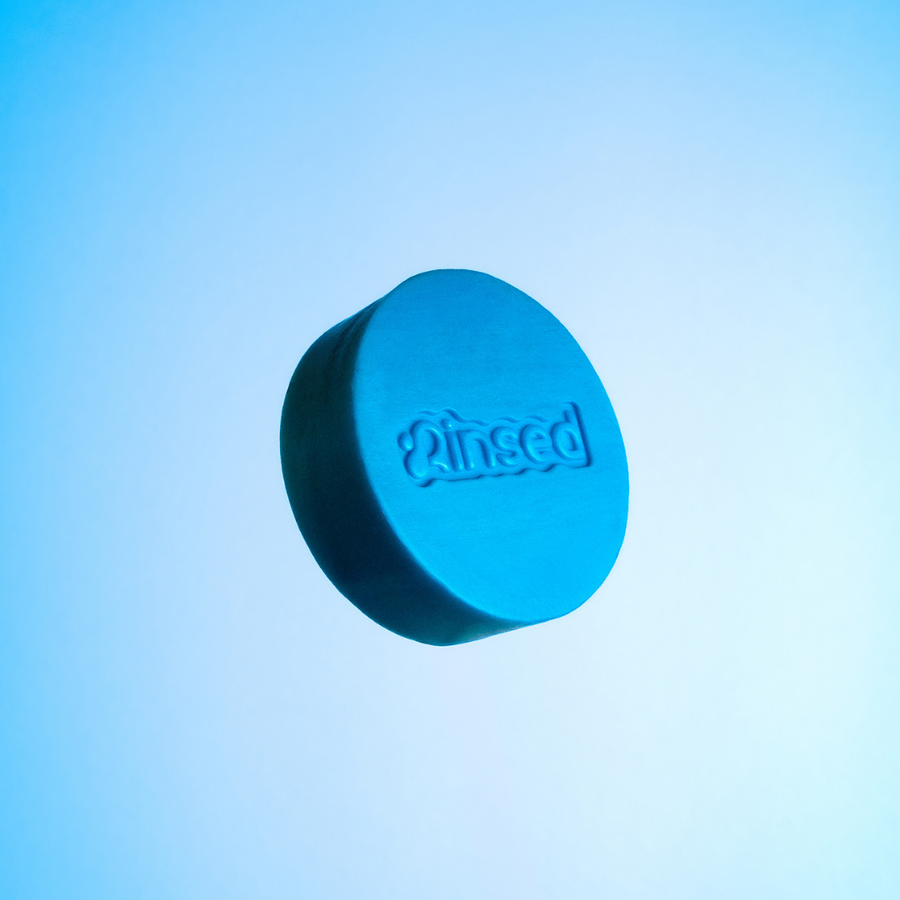
A case makes most sense when one bar does several jobs. A Rinsed bar is a syndet bar, with Sodium Cocoyl Isethionate as the first ingredient and no saponified oils, and it's one solid 3-in-1 bar for hair, body and face. One bar, one case, instead of three bottles in a liquids bag.

Shampoo, body and face wash, all in one bar. Cooling, refreshing and designed for those always on the go.
For the whole routine, from cutting a bar down before you leave to wrapping it on the last morning, follow the five steps in how to travel with a shampoo bar.
Does a soap case need cleaning?
Yes. Soap residue and standing water collect in the corners of any case, and damp surfaces are where trouble starts. Rinse it with warm water and a little soap, scrub the corners, and let it dry completely with the lid open before the bar goes back in.
US environmental guidance on mould puts it plainly: the key to mould control is moisture control, and mould can start to grow when spores land on surfaces that are wet. The same guidance says to scrub mould off hard surfaces with detergent and water and dry them completely. Public health guidance on cleaning at home agrees that soap, water and scrubbing remove most germs and dirt from surfaces.
In practice: rinse it when it looks slimy, and dry it fully after a trip before it goes in a drawer. Our step-by-step for metal, plastic and silicone is in how to clean a soap case.
Some metal tins also stain or rust when they stay wet, and why soap tins rust or stain explains which ones and how to prevent it.
Soap case for camping, hiking and backpacking
On foot, weight and a lid that stays shut matter most. Carry the bar in something light that won't open in your pack, dry it in the open at camp, and only use it where the lather has a drain to go down, such as a campsite shower or sink.
A backpacker's bag is the hardest place for a bar: squeezed, tipped over and closed for days. A light rigid case keeps the bar in one piece; a soap bag is lighter still and lets the bar breathe, but it won't stop a damp bar marking whatever it touches. You can also cut a small piece from a full bar and leave the rest at home.
At camp, the hotel rule applies: after washing, let the bar dry in the air before you pack it. And wash where there's a drain, such as a campsite shower block or sink. For the rest of a light wash kit, read backpacking toiletries.
For quick hand washes on the trail or at a festival, we compare paper soap sheets and a bar in a tin.
Where does a soap case earn its place?
A soap case earns its place wherever a bar has to share a bag: a gym bag, hand luggage, a weekend holdall, a festival tent. At home it doesn't: there, a bar is better off on a dish where it can drain and dry between showers.
Still deciding between a bar and a bottle for training? Our bar soap or shower gel at the gym article weighs it up.
On a flight, a solid bar is not a liquid: the airport liquids page we checked limits liquids, gels and pastes to 100 ml containers and lists body wash among the gels, but says nothing about a solid bar. The details are in can you take soap on a plane. For packing the rest of a carry-on, see hand luggage only toiletries.
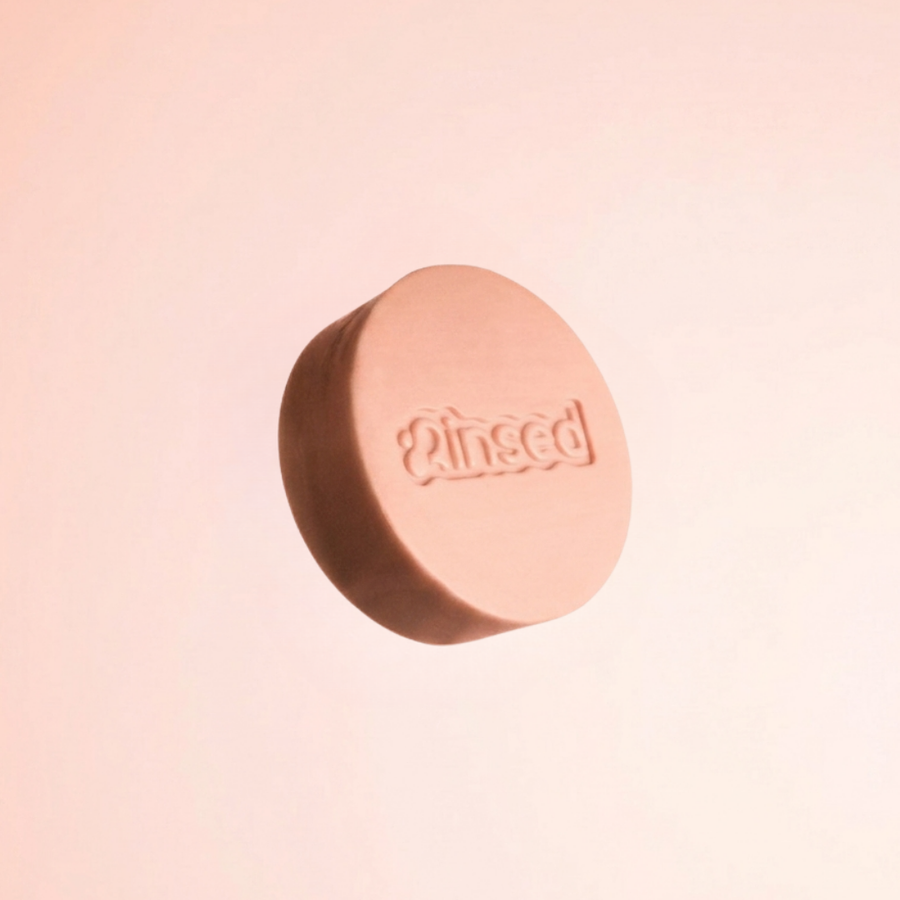
A bar and a case also make a useful present for someone who travels or trains a lot. Our gift bundle puts one bar, Minty Cactus or Blossom Blast, together with the metal travel case in a Rinsed™ gift box.

One Minty Cactus 3-in-1 bar and the black metal travel case, packed together in a Rinsed™ gift box.
Choosing for someone else is mostly about scent and about who they are, and our bar and case gift guide walks through it. Buying for a whole team or club? Our ideas for team and club gifts start there.
Summary
A soap case carries a bar; it doesn't store it. Tins, plastic boxes, silicone cases, ventilated cases and soap bags each trade weight, protection and airflow differently, so pick by trip: something rigid for a gym bag or hand luggage, something light for a long walk, and a draining dish at home.
The habit matters more than the case. Dry the bar before you close the lid, open it again when you arrive, and rinse and dry the case itself every so often.
Frequently asked questions
What is a travel soap case?
It is a small box or tin that carries a solid bar in a gym bag, suitcase or rucksack without the bar smearing over everything else. It is for carrying, not for storing a wet bar at home.
What kinds of soap case can you buy?
Most fall into five groups: metal tins, hard plastic boxes, silicone cases, ventilated or draining cases, and mesh or fabric soap bags. They differ in weight, protection and how much air reaches the bar.
Is an aluminium soap tin heavy?
Aluminium weighs approximately one third as much as steel, so an aluminium tin is light for a metal one. The Rinsed™ metal travel case, for example, weighs 20 g.
Can you put a wet bar in a soap case?
For a short trip, such as the walk from a hostel shower to your bunk, yes. Open the case as soon as you arrive so the bar can dry in the open. A bar closed up wet stays wet until the lid comes off.
How often should you clean a soap case?
Rinse it whenever it looks slimy, and dry it completely after every trip before you put it away. US environmental guidance says the key to mould control is moisture control.
Are bar soaps covered in bacteria?
A study of soap products in use found bacteria on 92 to 96% of bar soap samples. The same study found the numbers were not high compared with those on hands, so a dry bar and a clean case are the sensible answer.
Can you take a soap tin in hand luggage?
A solid bar is not a liquid. The airport liquids page we checked limits liquids, gels and pastes to 100 ml containers and says nothing about solid bars.
What is the best soap case for camping?
Something light with a lid that stays shut in a packed rucksack. Dry the bar in the open at camp, and only use it where the lather has a drain, such as a campsite shower or sink.
Sources
The facts in this article are based on the sources below, checked in October 2026.
- Microbial flora of in-use soap products. Applied and Environmental Microbiology, 1984.
- A Brief Guide to Mold, Moisture and Your Home. US Environmental Protection Agency, 2026.
- When and how to clean and disinfect your home. Centers for Disease Control and Prevention, 2025.
- Aluminum and aluminum alloys. ASM International, via NIST Materials Data Repository, 2001.
- Liquids in hand baggage. Schiphol, accessed 2026.