

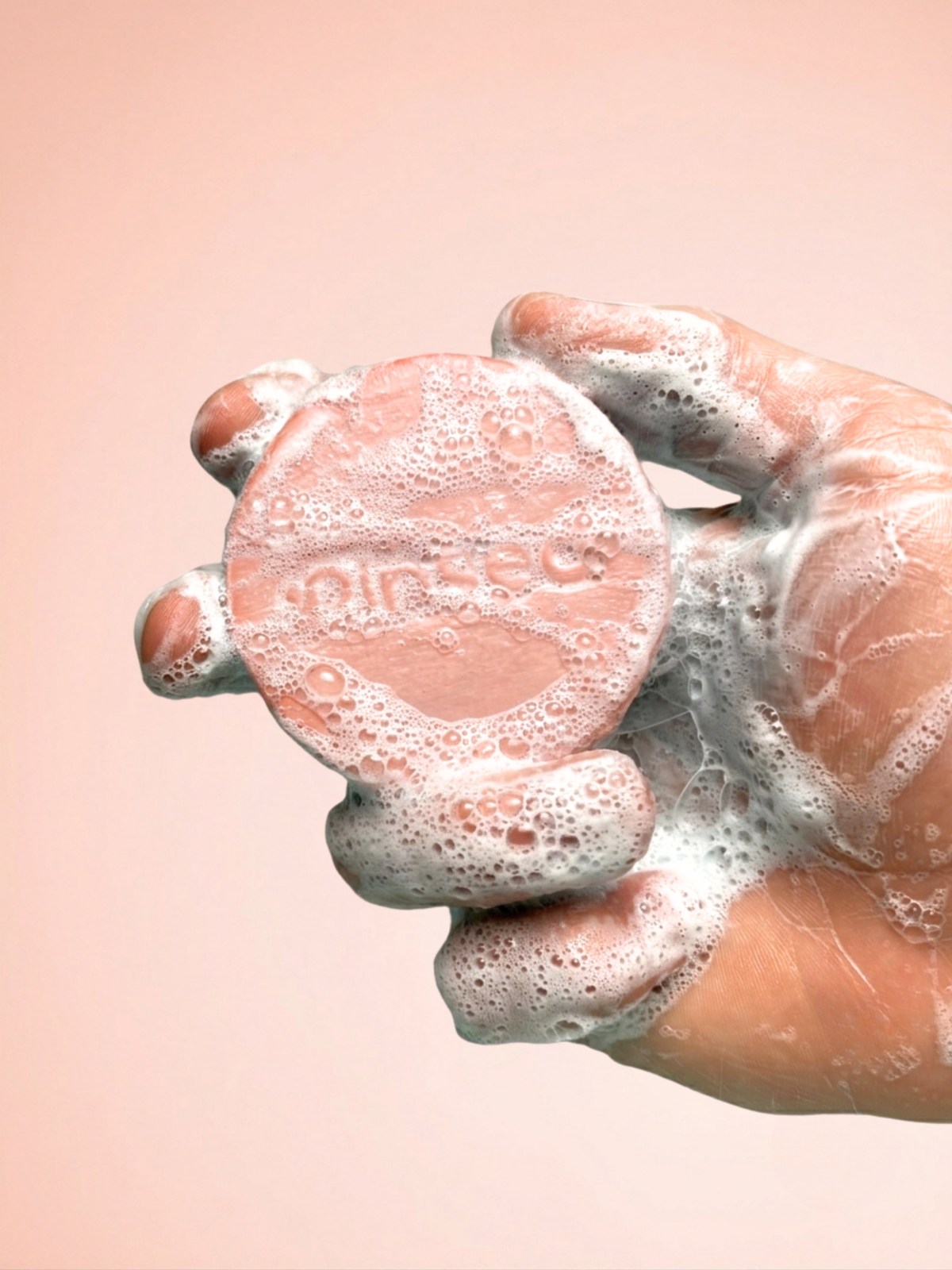
Most shampoo bar problems are not bar problems. Almost all of them trace back to three things: what the bar is made of, the water it meets, and how you are using it. Work out which of the three you are dealing with and the fix is usually obvious. Guess wrong and you can buy three different bars and have the same complaint every time.
That reframe matters, so it comes first. Below is a symptom table that turns what you are actually noticing into a likely cause, then a short explanation of each of the three causes, then a section on the cases where the bar is not involved at all. Every full answer lives in its own article, linked from the row or the paragraph that sends you there.
- 1. Start here: what usually goes wrong
- 2. Find your symptom
- 3. Cause one: what the bar is made of
- 4. Cause two: your water
- 5. Cause three: technique
- 6. When it is not the bar at all
- 7. Summary
- 8. Frequently asked questions
Start here: what usually goes wrong
The single most useful question is whether your bar is soap or a syndet, because that one fact decides how it behaves in your water. It is also the fact almost nobody checks, because the packaging rarely says either word.
Traditional soap is made by saponifying oils or fats. It is alkaline, and when it meets the calcium and magnesium in hard water it forms an insoluble compound, lime scum, that settles on hair and does not rinse away. A syndet bar uses synthetic surfactants instead of saponified oils, is formulated closer to the pH of skin and hair, and does not form lime scum. Rinsed bars are syndets, with Sodium Cocoyl Isethionate first on the ingredient list and no saponified oils.
Once you know which type you have, the rest of the diagnosis is quick. Use the table to name what you are seeing, then follow the link for the full answer.
Find your symptom
Fourteen of the complaints people actually write down, with the cause that explains each one most often. Most likely does not mean only possible, so if the first link does not describe your situation, read the cause section underneath the table that matches it.
| What you are seeing | Most likely cause | Where to read more |
|---|---|---|
| Hair feels waxy or greasy once it dries | Lime scum from a soap bar in hard water, or simply too much product left in | Why hair feels waxy after switching |
| A film you can feel that will not rinse out | Your water, reacting with a saponified oil bar | Do shampoo bars work in hard water |
| Barely any lather, or none at all | Not enough water, not enough contact time, hard water, or build-up already on the hair | Why a shampoo bar will not lather |
| Hair feels dry, rough or straw like | The thing people call the transition period, which is really three separate problems | The transition period, explained |
| Hair tangles far more than it used to | Missing slip after washing, which is a conditioning question rather than a bar question | Do you need conditioner with a bar |
| Curls dry, frizzy or refusing to clump | Curly hair starts drier by construction, so residue and pH show up on it first | Shampoo bars on curly hair |
| Fine hair gone flat and lifeless | The same film is a much bigger share of a narrow strand, so fine hair notices it first | Shampoo bars and fine hair |
| Colour fading faster than expected | Pigment leaving the hair, with pH and wash frequency doing most of the work | Shampoo bars and coloured hair |
| Hair squeaks and feels stripped | An alkaline bar, or washing more often than your scalp needs | Soap versus syndet explained |
| Scalp itching or flaking | Could be residue, could be an ingredient, could be a condition that needs treating | What the labels actually mean |
| Bar turns soft and mushy between washes | It is sitting in standing water and never drying out | How to store a bar so it does not mush |
| Bar disappearing much faster than you expected | Too much per wash, or storage, or both | How long a shampoo bar lasts |
| The scent does not stay in your hair | Normal. A rinse off wash is designed to leave, and so is its parfum | What is actually in a shampoo bar |
| Fine on your body, but your hair feels coated | You are probably using a body soap bar on hair, which is a different product | Shampoo bar vs soap bar vs 3-in-1 |

Shampoo, body and face wash, all in one bar. Cooling, refreshing and designed for those always on the go.
Cause one: what the bar is made of
Two bars can look identical on a shelf and behave nothing alike in the shower. The split that matters is saponified oils versus synthetic surfactants, and you can read it off the ingredient list in about ten seconds.
Look at the first few ingredients after water, if water is even there. Names in the pattern Sodium Olivate, Sodium Cocoate, Sodium Palmate or Sodium Shea Butterate mean saponified oils, which is to say true soap. Names like Sodium Cocoyl Isethionate, Sodium Methyl Cocoyl Taurate, Sodium Lauroyl Sarcosinate or Coco Glucoside mean synthetic surfactants, which is a syndet. A few bars mix both, in which case the earlier name tells you which dominates.
Why it matters: true soap is alkaline, and alkaline washing lifts the cuticle. That is the mechanism behind a lot of what gets reported as roughness, dullness, tangling and faster colour loss. It also reacts with dissolved calcium to form lime scum, which is the film people describe as waxy. A syndet is built around surfactants that stay closer to the natural pH of hair and do not react with calcium that way.
Almost nobody prints the word syndet on the front of a pack, and soap free, sulphate free and pH balanced are not the same claim as each other. Start with what a syndet bar is, then what those labels actually mean, and if you want a full ingredient list read line by line, here is ours.
Cause two: your water
The same bar can behave one way at home and completely differently at your parents' house, and nothing about the bar has changed. Water hardness is the variable, and most people have no idea what theirs is.
Hard water carries dissolved calcium and magnesium. When soap meets those minerals the fatty acids bind to them and form an insoluble salt. That is the same grey ring that builds up in a bathtub and the same scale on a kettle element, except this time it is depositing on hair. It does not rinse out with more water, because it is not dissolved in the water. Fine hair and curly hair notice it first, fine hair because the deposit is a larger share of each strand, curly hair because it was drier to begin with.
Three quick tells. Your kettle scales up quickly. Soap lather collapses fast in the sink. Glass shower screens dry with white spots. Your water company publishes a hardness figure for your postcode, which settles it properly. If your water is hard and your bar is a true soap, that combination alone explains the majority of waxy hair complaints. Either change the bar or change the chemistry with an acidic rinse. The full method, including how much vinegar and how often, is in shampoo bars in hard water, and the specific waxy feeling is covered in why hair feels waxy after switching.

Shampoo, body and face wash, all in one bar. Keep your hair and skin healthy on the go. Monoï-infused scent with a touch of vanilla. Designed for those always on the go.
Cause three: technique
A bar is concentrated, so the habits you built around a bottle work against you. Four things change, and they account for most of what is left once the bar and the water are ruled out.
Wet your hair properly, roughly 30 seconds, longer if it is thick. Damp hair will not carry lather, and water is what spreads the product. Use far less than instinct suggests: there is no water in a bar, so two or three passes over a wet head is already more surfactant than a squeeze from a bottle. Put it on your scalp, not the lengths, because the scalp is where oil comes from and the ends are the oldest and driest part. Then rinse for 60 to 90 seconds, judging by feel rather than by foam, lifting sections at the nape and behind the ears where water tends not to reach.
The trap is the foam. No instant lather makes people add more product, and the extra is then almost impossible to rinse out, which produces exactly the coated feeling they were trying to avoid. Lather builds during the massage. Give it a minute before you reach for the bar again. The full method with timings is in how to use a shampoo bar, and if you have short hair, a beard, or you wash most days, shampoo bars for men covers what genuinely differs and what is just marketing.
When it is not the bar at all
Three situations where changing shampoo will not fix anything, because the bar was never the cause.
Product already on your hair. Silicones and heavy styling products build up over time, and that layer sits between any shampoo and the hair. A bar arriving in the middle of that gets blamed for a film it did not create. One clarifying wash usually settles the question, and the transition period article explains how to tell old product apart from lime scum and from sebum rebalancing.
A scalp that needs treating, not washing. Persistent itching, flaking that keeps returning, soreness, tenderness or hair loss are not shampoo problems and no bar on any shelf will solve them. Speak to a pharmacist or a doctor. Swapping products repeatedly while something medical goes untreated wastes time and makes it harder to work out what actually changed.
How often you wash. Washing more often than your scalp needs produces the squeaky, stripped feeling people blame on the bar, and washing less often than it needs produces the greasy roots they also blame on the bar. Neither is about format. If after all of this you are still weighing up whether to carry on, shampoo bar vs liquid shampoo sets out honestly where bars fall short.
Shampoo, body and face wash, all in one bar. Cooling, refreshing and designed for those always on the go.
Summary
Name the symptom, then work through the three causes in order. Check the ingredient list first, because saponified oils versus synthetic surfactants is the fact that decides the most. Then check your water, because hard water plus a true soap explains the majority of film and waxiness complaints. Then check technique: less product, on the scalp, rinsed for longer than feels necessary.
If none of the three fits, consider that it may not be the bar. Old styling product, a scalp condition that needs a pharmacist or a doctor, and washing frequency all produce symptoms that get blamed on shampoo. And if your bar is getting soft or vanishing quickly, that is a storage question rather than a formula one.
Frequently asked questions
How do I know whether my shampoo bar is soap or a syndet?
Read the ingredient list, not the front of the pack. Names like Sodium Olivate, Sodium Cocoate or Sodium Palmate mean saponified oils, which is true soap. Names like Sodium Cocoyl Isethionate or Sodium Lauroyl Sarcosinate mean synthetic surfactants, which is a syndet. Whichever appears earliest is the one doing most of the work.
Why does my hair feel waxy only sometimes?
Usually because the water changed. Hardness varies by region and sometimes by building, so a bar that behaves one way at home can behave differently at a hotel or at a relative's house. If the bar is a true soap, harder water means more lime scum. If it is a syndet, that particular reaction does not happen.
Does more lather mean it is cleaning better?
No. Foam is mostly a side effect of certain surfactants and of how much water and air are in the mix. Hard water suppresses it, and so does grease already on the hair. Judge by how your scalp feels afterwards rather than by how much foam you saw.
My scalp is itching and flaking. Should I try a different bar?
Not as a first move. Persistent itching, flaking, soreness or hair loss can have causes that shampoo cannot address, so speak to a pharmacist or a doctor before working through more products. If it started immediately after a specific product change and settles when you stop, that is different, but it is still worth asking.
How long should I give a new bar before deciding?
Two to four weeks is a reasonable window, but only once you have ruled out the obvious. If your water is hard and the bar is a true soap, waiting will not change the chemistry. Fix the identifiable causes first, then judge.
Can I fix all of this with an apple cider vinegar rinse?
It helps with one specific problem, a mineral deposit left by soap in hard water, because the acid dissolves it. It will not fix too much product, too short a rinse, old silicone build-up or a scalp condition. Use it as a targeted tool rather than a routine step.



