
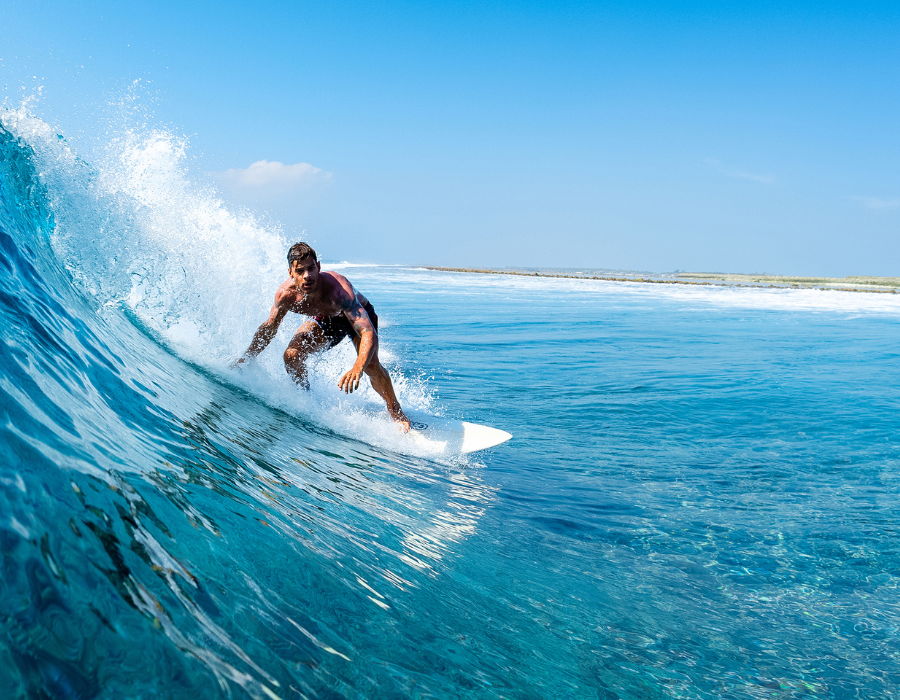
Note to travelling surfers
- Ecosystem first. Be kind to the environment you’re visiting: don’t leave any trash behind.
- Be kind to locals. Every lineup has an order and it was earned over years. Wait your turn, and respect local etiquette.
- Fly less, stay longer. The flight is the biggest impact of any surf trip. Two weeks once beats one week twice!
The best places to surf without a wetsuit are Costa Rica, Sri Lanka, Bali, the Maldives and Nicaragua. All five sit between 26 and 30 degrees in the water year round, which is warm enough for boardshorts and a rash vest with no neoprene at all. As a rule of thumb, water above 24 degrees is comfortable without a wetsuit for most people, and above 27 degrees you will not think about it once.
Surfing without a wetsuit is the dream: warm water, lighter paddling, and you can stay out until your arms quit. This Top 5 is not exhaustive, but these picks combine genuinely warm water with a real surf scene and plenty of break options. Each destination has a spot table with quick, approximate stats so you can plan faster.
- 1. Costa Rica (Pacific coast)
- 2. Sri Lanka (southwest and east coasts)
- 3. Indonesia (Bali)
- 4. Maldives (North and South Malé atolls)
- 5. Nicaragua (Pacific coast)
- 6. Water temperature and what to wear
- 7. Other warm water favourites
- 8. Frequently asked questions

Costa Rica (Pacific coast)
Costa Rica is the easy warm water win: consistent heat, plenty of surf towns, and breaks for pretty much every level. Santa Teresa is a good example of year round warmth, with sea temperatures usually between 26 and 29 degrees, which is warm enough for boardshorts and a rash vest.
The Pacific coast works all year, with southern hemisphere swell from April to October and dry season offshores from November to April. We have full guides to Tamarindo, Santa Teresa and the wider best surf spots in Costa Rica.
Popular surf spots and conditions (Costa Rica)
This table is for quickly comparing well known zones. It is approximate, and conditions vary by swell, tide and beach shape.
| Surf spot | Level vibe | Typical wave size (m) | Water temp (°C) |
|---|---|---|---|
| Tamarindo | Beginner to intermediate | 0.5 to 2.0 | 26 to 29 |
| Nosara (Playa Guiones) | Beginner to intermediate | 0.8 to 2.5 | 26 to 29 |
| Santa Teresa | Beginner to advanced | 0.8 to 3.0 | 26 to 29 |
| Playa Hermosa (Jacó) | Advanced | 1.5 to 4.0 | 26 to 29 |
| Dominical | Intermediate to advanced | 1.0 to 3.5 | 26 to 29 |

Shampoo, body and face wash, all in one bar. Cooling, refreshing and designed for those always on the go.

Sri Lanka (southwest and east coasts)
Sri Lanka is warm water surfing with a bonus superpower: you can follow the seasons by switching coasts. The water stays around 27 to 29 degrees all year, so it is boardshorts friendly whichever side of the island you are on.
The south and west coasts work from November to April, and the east coast around Arugam Bay takes over from May to October. That means there is always a season running. Full details in our guide to the best surf spots in Sri Lanka.
Popular surf spots and conditions (Sri Lanka)
This table helps you pick a coast and match the vibe to your level. It is approximate, and the reefs can be shallow in places, so easing in is always smart.
| Surf spot | Level vibe | Typical wave size (m) | Water temp (°C) |
|---|---|---|---|
| Weligama | Beginner to intermediate | 0.5 to 2.0 | 27 to 29 |
| Midigama | Intermediate | 0.8 to 2.5 | 27 to 29 |
| Hikkaduwa | Intermediate to advanced | 1.0 to 3.0 | 27 to 29 |
| Arugam Bay Main Point | Intermediate to advanced | 1.0 to 3.0 | 27 to 29 |
| Peanut Farm (Arugam area) | Beginner to intermediate | 0.5 to 2.0 | 27 to 29 |

Indonesia (Bali)
Bali is the poster child for no wetsuit surf trips. Water temperatures sit around 26 to 30 degrees, and April to October is the peak window for consistent swell on the west coast. Better still, Bali’s lineup of spots lets you choose your intensity from mellow to very serious within a short drive.
In the wet season from November to March, switch to the east coast: the westerly winds that blow out the Bukit are offshore at Nusa Dua, Keramas and Sanur. More in our guide to the best surfing destinations in Asia.
Popular surf spots and conditions (Bali)
This table is for setting expectations. It is approximate, and the reefs get sharp and shallow, so picking a wave you can handle comfortably is the move.
| Surf spot | Level vibe | Typical wave size (m) | Water temp (°C) |
|---|---|---|---|
| Kuta | Beginner | 0.5 to 1.5 | 26 to 30 |
| Canggu | Beginner to intermediate | 0.5 to 2.0 | 26 to 30 |
| Uluwatu | Advanced to expert | 1.5 to 4.0 | 25 to 28 |
| Padang Padang | Expert | 1.5 to 3.5 | 26 to 30 |
| Impossibles | Intermediate to advanced | 1.0 to 3.0 | 26 to 30 |

Shampoo, body and face wash, all in one bar. Keep your hair and skin healthy on the go. Monoï-infused scent with a touch of vanilla. Designed for those always on the go.

Maldives (North and South Malé atolls)
The Maldives is warm water reef surfing in its cleanest form. It is on the list because the water stays tropical all year at 27 to 29 degrees, and surfing in boardshorts is simply standard. It is also a great option if you like surf travel that runs smoothly, because boats and resort bases make it easy to chase the best conditions.
The season runs roughly March to October, with the biggest swell from June to September. Full details in our guide to the best surf spots in the Maldives.
Popular surf spots and conditions (Maldives)
This table is a planning guide. It is approximate, and shallow reef plus current can raise the difficulty fast.
| Surf spot | Level vibe | Typical wave size (m) | Water temp (°C) |
|---|---|---|---|
| Sultans | Intermediate to advanced | 1.0 to 3.0 | 27 to 29 |
| Chickens | Intermediate | 0.8 to 2.5 | 27 to 29 |
| Cokes | Advanced | 1.5 to 3.5 | 27 to 29 |
| Jailbreaks | Advanced | 1.5 to 4.0 | 27 to 29 |
| Pasta Point | Expert | 2.0 to 5.0 | 27 to 29 |

Nicaragua (Pacific coast)
Nicaragua is warm water, plenty of waves, and often a bit more breathing room than some of the big name neighbours. It made the list because you can keep it simple: surf a lot, recover fast, and find breaks that match your comfort level without needing neoprene.
The offshore wind that blows across Lake Nicaragua for much of the year is the local secret, and it keeps lineups groomed for hours. More in our guide to the best surfing destinations in Central America.
Popular surf spots and conditions (Nicaragua)
This table is for quick comparison. It is approximate, and some reefs and points feel heavy when the swell is up.
| Surf spot | Level vibe | Typical wave size (m) | Water temp (°C) |
|---|---|---|---|
| Popoyo | Intermediate to expert | 1.0 to 5.0 | 26 to 29 |
| Playa Colorado | Beginner to intermediate | 0.5 to 2.0 | 26 to 29 |
| Playa Maderas | Beginner to advanced | 0.8 to 3.0 | 26 to 29 |
| Playa Santana | Advanced | 1.5 to 4.0 | 26 to 29 |
| Beginner friendly bays (varies) | Beginner | 0.5 to 1.5 | 26 to 29 |

Water temperature and what to wear
This is the quick rule of thumb for deciding whether you can leave the neoprene at home. Personal tolerance varies, and wind, session length and how much you are moving all change how cold you feel.
| Water temp (°C) | What most surfers wear | Notes |
|---|---|---|
| 27 and above | Boardshorts | No wetsuit needed at all. A rash vest is for sun and board rash, not warmth. |
| 24 to 26 | Boardshorts or a thin top | Comfortable for most people, though a long session can get chilly in wind. |
| 21 to 23 | Shorty or 2mm top | Borderline. Fine for a short surf, cold after two hours. |
| 18 to 20 | 3/2 wetsuit | Below the no wetsuit threshold for almost everyone. |
Warm water surfing has one practical upside people forget: your post surf rinse is quick and you need almost nothing with you. Shower gel bottles are bulky and unkind to the places we travel to, and there is enough plastic in the ocean as it is. That is partly why I started Rinsed™: pocket sized bars so you can get fresh anywhere you go. A bar also skips the airport liquid rules, which we cover in can you take soap on a plane.
Shampoo, body and face wash, all in one bar. Cooling, refreshing and designed for those always on the go.
Other warm water favourites
Here are more popular no wetsuit surf destinations to keep on your list. This table is for quick comparison and planning, and the stats are approximate.
| Other destination | Typical water temp (°C) | Level vibe |
|---|---|---|
| Mexico (Oaxaca) | 26 to 30 | Intermediate to expert |
| Philippines (Siargao): see the full Siargao surf guide | 27 to 29 | Intermediate to advanced |
| Brazil (northeast) | 26 to 29 | Beginner to advanced |
| Barbados | 26 to 28 | Beginner to advanced |
| Tahiti | 24 to 27 | Advanced to expert |
Summary
If the goal is never thinking about neoprene, Costa Rica, Sri Lanka, Bali, the Maldives and Nicaragua are the dependable classics. Costa Rica and Bali are especially strong if you want lots of different surf spots within easy reach, while Sri Lanka and the Maldives shine when you like clean, warm water sessions with a clear seasonal rhythm.
Planning by month instead? Our guides to the best surfing destinations in December and July both lean warm.
Frequently asked questions
What water temperature can you surf without a wetsuit?
Most surfers are comfortable in boardshorts above 24 degrees, and above 27 degrees you will not think about it at all. Between 21 and 23 degrees is borderline: fine for a short session, cold after two hours, especially with wind. Below 20 degrees almost everyone wants at least a shorty.
Where is the warmest water to surf?
Bali, Sri Lanka and the Maldives all sit at the top end, with water regularly between 27 and 30 degrees. Costa Rica and Nicaragua are close behind at 26 to 29 degrees. All five are warm enough for boardshorts every day of the year.
Do I still need a rash vest without a wetsuit?
A rash vest is worth wearing, but for sun protection and board rash rather than warmth. Tropical sun is strong and a long sleeve top saves you from reapplying sunscreen every hour. Reef booties are also useful in Bali, Sri Lanka and the Maldives.
Which warm water destination is best for beginners?
Sri Lanka and Costa Rica are the two best. Weligama in Sri Lanka and Playa Guiones in Nosara are both sandy bottomed, gentle and full of surf schools. Bali’s Kuta Beach is another good option. Avoid the Maldives as a first trip, since almost everything there is a reef pass.
What do I pack for a warm water surf trip?
Boardshorts, a long sleeve rash vest, reef booties, reef safe sun protection, a quick dry towel and a solid wash bar instead of bottles. A 3-in-1 bar covers shampoo, body wash and face wash in one 80g piece and lasts 30 to 60 washes, so it survives a two week trip easily.
Can I take a soap bar in my hand luggage?
Yes. Solid soap and shampoo bars are not liquids, gels or aerosols, so they do not count towards the 100ml hand luggage allowance and do not need a clear plastic pouch. Useful on trips with small internal flights and tight baggage rules. More detail in our guide on taking soap on a plane.
Pack lighter for your next surf trip
Shampoo, body and face wash in one 80g bar. No bottles to leak through your boardbag, no liquid limits at the airport, and 30 to 60 washes per bar.
Travel with Rinsed™ →30 day money back guarantee, no questions asked.
Alexandre
Founder @Rinsed™
Hey, I’m Alexandre! I started Rinsed™ for people like myself: sporty, hardworking and always on the go. Check out our bars!