
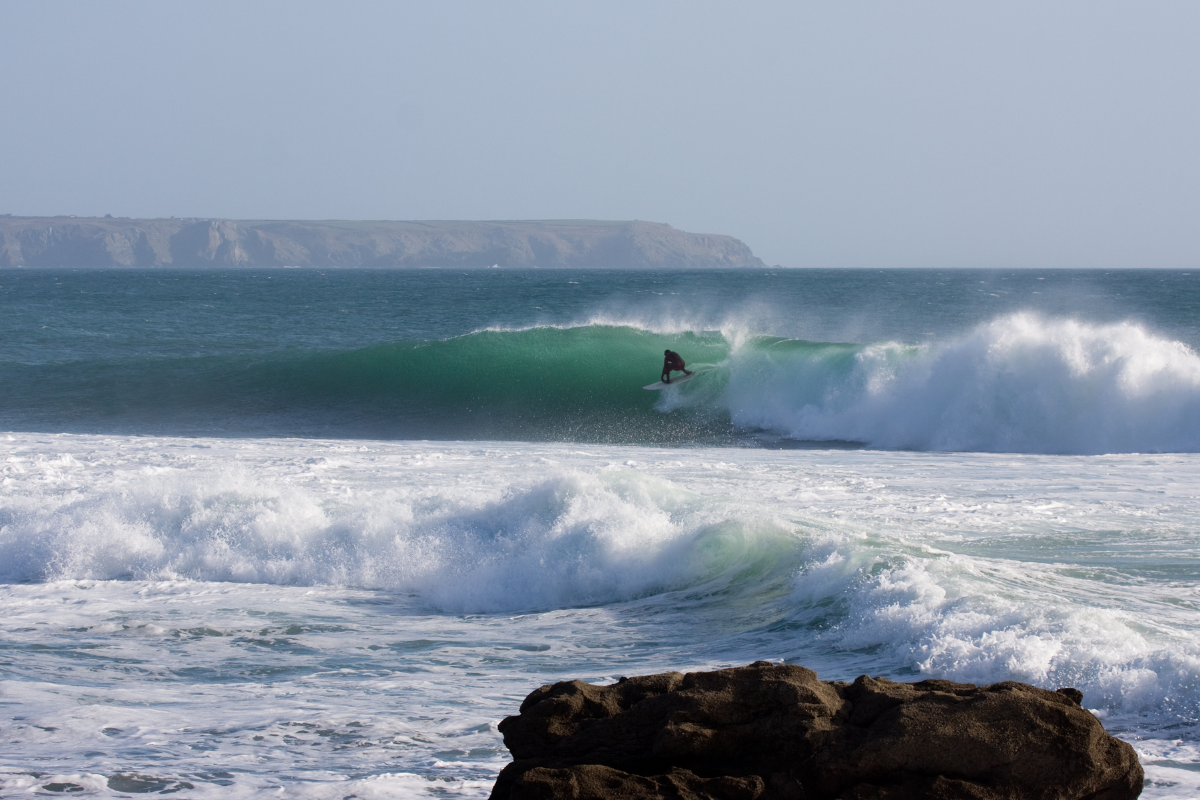
Note to travelling surfers
- Ecosystem first. Be kind to the environment you’re visiting: don’t leave any trash behind.
- Be kind to locals. Every lineup has an order and it was earned over years. Wait your turn, and respect local etiquette.
- Fly less, stay longer. The flight is the biggest impact of any surf trip. Two weeks once beats one week twice!
The best surfing destinations in the UK are Newquay's Fistral Beach in Cornwall for consistent Atlantic beach break, Thurso East in Scotland for one of Europe's finest cold water reefs, Croyde Bay in North Devon for punchy peaks without the Cornwall crowds, Llangennith on the Gower Peninsula for Wales' most reliable waves, and Sennen Cove and Porthleven in west Cornwall for exposed swell magnets and heavy reef. September to March is the main season, when Atlantic swell is most consistent. Beginners should aim for May to September at Fistral South, Croyde or Towan Beach.
Hey surfers! Ready to explore the wild, wave-rich coastline of the UK in 2026?
Whether you're chasing hollow barrels or easy rollers, the UK delivers a surprising variety of surf within its compact shores.
From the famous beach breaks of Cornwall to the powerful reef setups in Scotland, there's a wave that suits nearly every style and experience level.
Let's (duck)dive into this guide together!
- 1. Newquay (Fistral Beach, Cornwall)
- 2. Thurso East (Caithness, Scotland)
- 3. Croyde Bay (North Devon)
- 4. Llangennith (Gower Peninsula, Wales)
- 5. Sennen Cove (West Cornwall)
- 6. Porthleven (South Cornwall)
- 7. How to surf safely in the UK (by level)
- 8. Surf spots in the UK: locals and the environment
- 9. Summary
- 10. Frequently asked questions

Newquay (Fistral Beach, Cornwall)
Newquay is the beating heart of British surfing, and Fistral Beach is the wave that defines it.
This west-facing beach picks up consistent Atlantic swells year-round, delivering everything from fun, approachable peaks to serious, punchy surf when conditions align.
North Fistral ramps up the intensity with bigger, faster waves, while South Fistral offers a slightly mellower vibe that's perfect for progressing surfers.
It's a spot that rewards timing and positioning, especially when the swell climbs above head-high and the banks cooperate.
What are the best surf spots in Newquay?
Here's a breakdown to help you dial in the right zone. Skill levels are rough guides: when uncertain, grab a lesson or watch the lineup first!
| Spot | Skill Level | Wave Size (meters) | Best Months |
| Fistral North | Intermediate to Expert | 1.0 to 3.5m | Sep to Mar |
| Fistral South | Beginner to Intermediate | 0.5 to 2.0m | Apr to Aug |
| Towan Beach | Beginner | 0.5 to 1.5m | May to Sep |
| Great Western Beach | Beginner to Intermediate | 0.5 to 1.5m | Year-round |
| Watergate Bay | Beginner to Advanced | 0.8 to 3.0m | Year-round |
Shower gel bottles are really bulky and unkind to the places we travel to: there's enough plastic in the ocean as it is! That's partly why I started Rinsed™: pocket-sized bars to be fresh anywhere I go!

Shampoo, body and face wash, all in one bar. Cooling, refreshing and designed for those always on the go.

Thurso East (Caithness, Scotland)
Thurso East isn't just another UK surf spot, it's one of Europe's finest reef breaks and a true cold-water challenge.
When the swell direction, tide, and wind converge properly, this right-hand reef produces long, powerful walls that can barrel from takeoff to channel.
It's a serious commitment spot that demands strong paddling, sharp decision-making, and respect for the environment.
The water is cold year-round, so proper thermal protection is non-negotiable.
What are the best surf spots in Thurso?
Thurso rewards preparation and local knowledge, so don't rush your first session. Here are some of its famous surf spots and corresponding levels (approximate, and it depends on the time of year).
| Spot | Skill Level | Wave Size (meters) | Best Months |
| Thurso East (main reef) | Advanced to Expert | 1.5 to 4.0m+ | Sep to Apr |
| Thurso beach breaks | Intermediate | 0.8 to 2.0m | Year-round |
| Brims Ness | Intermediate to Advanced | 1.0 to 3.0m | Oct to Mar |
| Sandside Bay | Beginner to Intermediate | 0.5 to 1.5m | May to Aug |

Croyde Bay (North Devon)
Croyde Bay is a consistently fun beach break that's become a go-to for surfers wanting quality without the crowds of Cornwall.
The bay picks up plenty of swell and works across a wide tide range, producing punchy peaks that can get hollow when the sandbanks are dialed.
It's accessible enough for developing surfers on smaller days but still delivers when autumn swells march through.
The village vibe is relaxed but surf-focused, making it an easy base for a proper session-focused trip.
What are the best surf spots in the Croyde area?
Here is a table with a few surf spots in the Croyde area.
| Spot | Skill Level | Wave Size (meters) | Best Months |
| Croyde Bay | Beginner to Advanced | 0.5 to 2.5m | Sep to Nov |
| Woolacombe | Beginner to Intermediate | 0.5 to 2.0m | Apr to Oct |
| Saunton Sands | Beginner to Intermediate | 0.5 to 2.0m | May to Sep |
| Putsborough | Intermediate | 0.8 to 2.5m | Sep to Mar |

Llangennith (Gower Peninsula, Wales)
Llangennith is Wales' premier surf beach and consistently one of the UK's most reliable waves.
This beautiful stretch of sand catches Atlantic swells and offers multiple peaks that spread the crowd naturally.
The backdrop is stunning, rolling dunes and wild coastline that feels properly remote despite being relatively accessible.
When conditions line up, particularly on autumn swells with offshore winds, Llangennith serves up clean, powerful walls that reward committed surfing.
What are the best surf spots in the Llangennith area?
Here's your practical guide to the main zones surfers rotate through depending on tide, swell, and wind direction.
| Spot | Skill Level | Wave Size (meters) | Best Months |
| Llangennith (main beach) | Beginner to Advanced | 0.5 to 3.0m | Sep to Apr |
| Llangennith Point | Advanced | 1.5 to 3.5m (needs solid swell) | Oct to Mar |
| Rhossili Bay | Intermediate to Advanced | 1.0 to 3.0m | Sep to Mar |
| Caswell Bay | Beginner to Intermediate | 0.5 to 1.5m | Year-round |

Sennen Cove (West Cornwall)
Sennen Cove sits at the very southwestern tip of Britain, making it one of the most exposed swell magnets in the country.
This beach break can handle serious size while still offering mellower sessions when swells drop or when you pick the right bank.
The northerly peaks tend to be faster and hollower, while the southern section often provides a friendlier entry point. It's a beautiful spot that captures the raw Atlantic energy perfectly.
What are the best surf spots in the Sennen area?
Think of this as a "read-the-day" beach where positioning and bank selection matter as much as the forecast.
| Spot | Skill Level | Wave Size (meters) | Best Months |
| Sennen Cove (north peaks) | Intermediate to Advanced | 1.0 to 3.5m | Oct to Mar |
| Sennen Cove (south end) | Beginner to Intermediate | 0.5 to 2.0m | May to Sep |
| Gwenver Beach | Intermediate to Advanced | 1.0 to 3.0m | Sep to Apr |
| Whitesand Bay | Beginner to Intermediate | 0.5 to 2.0m | Year-round |

Shampoo, body and face wash, all in one bar. Keep your hair and skin healthy on the go. Monoï-infused scent with a touch of vanilla. Designed for those always on the go.

Porthleven (South Cornwall)
Porthleven is legendary for a reason: when big winter swells slam into the reef, this right-hander becomes one of the UK's most powerful and consequential waves.
It's a wave that demands experience, fitness, and proper judgment about when to paddle out.
On smaller swells it's more manageable but still technical, with fast sections and shallow moments that keep things interesting.
Treat this as a "watch first, surf second" destination unless you're already comfortable in serious reef conditions.
What are the best surf spots in the Porthleven area?
This table emphasises consequence. Porthleven rewards caution and local insight, especially when it's firing.
| Spot | Skill Level | Wave Size (meters) | Best Months |
| Porthleven Reef | Expert only | 2.0 to 5.0m+ | Nov to Feb |
| Porthleven beach | Intermediate | 0.8 to 2.0m | Year-round |
| Praa Sands | Beginner to Intermediate | 0.5 to 2.0m | Apr to Oct |

How to surf safely in the UK (by level)
Choosing a wave that matches your ability is just as critical as checking the forecast: UK waters can shift from playful to powerful depending on season and swell direction.
Beginner surfers
- Stick to lifeguarded beaches during patrol hours and choose sandy, forgiving setups.
- Book a lesson early to accelerate learning and understand local hazards.
- If currents look confusing or strong, don't guess: ask instructors or lifeguards before entering.
Intermediate surfers
- Keep sessions within your control range: if you're getting repeatedly worked, step back or move zones.
- Respect space in lineups and avoid drifting into priority takeoff zones.
- Monitor tide swings and wind shifts; UK conditions can deteriorate rapidly with changing weather.
Advanced surfers
- Do a thorough beach assessment before paddling out: identify channels, rips, hazards, and wave patterns.
- Surf with a partner on heavy days and establish clear communication and exit strategies.
- When locals advise against a session due to conditions or hazards, listen and relocate.

Surf spots in the UK: locals and the environment
Like many others across the world, the UK's surf communities thrive when visitors approach them with awareness and respect.
Respect locals
- Follow lineup etiquette: don't drop in, don't paddle battle, and don't crowd the inside.
- Observe the rotation before jumping into the peak to understand positioning and wave selection.
- Keep interactions positive and straightforward, especially when conditions are crowded or intense.
- Give adequate space: avoid paddling through impact zones or sitting on top of positioned surfers.
- Be considerate on shore: park responsibly, minimise noise, and use designated access routes.
Respect the environment
- Remove all waste, including broken leashes, wax fragments, and food packaging.
- Stick to marked trails to protect sensitive dune systems and coastal vegetation.
- Avoid using soaps or chemicals near drainage systems that flow back to the ocean.
- Participate in local beach cleans if they're running during your visit.
Summary
The UK is the kind of surf destination that surprises: world-class reefs in Scotland, consistent beach breaks across Devon and Cornwall, powerful point setups in Wales, and a surf culture that's welcoming when you arrive with the right attitude.
Whether you're hunting barrels at Thurso East, learning at Croyde, experiencing big-wave intensity at Porthleven, or enjoying long rides at Llangennith, there's a wave that fits your progression and ambition.
Match destinations to your skill level, dial in the forecast details, stay humble in the lineup, and embrace the adventure!
Planning a bigger trip? Compare the UK with the rest of the continent in our guide to the best surfing destinations in Europe, or head south to the best surfing destinations in France.
Frequently asked questions
Where is the best place to surf in the UK?
Newquay in Cornwall is the best all round base, with Fistral Beach picking up swell year round and options for every level within walking distance. For wave quality alone, Thurso East in Scotland is the finest wave in the country, but it is an advanced to expert cold water reef.
When is the best time to surf in the UK?
September to March, when Atlantic swell is most consistent and the autumn water is still relatively mild. September to November is the sweet spot: good swell, fewer crowds and warmer water than midwinter. May to September is the beginner season.
Where can beginners surf in the UK?
Fistral South and Towan Beach in Newquay, Croyde Bay and Saunton Sands in North Devon, Caswell Bay in Wales, and Whitesand Bay in Cornwall. All sit in the 0.5 to 2m range and are most forgiving between May and September.
What wetsuit do you need to surf in the UK?
A 4/3mm is the year round standard in Cornwall and Devon, with a 3/2mm workable in high summer. In Scotland, where the water is cold all year, a 5/4mm with boots, gloves and a hood is normal in winter. Thermal protection is not optional at Thurso.
Is Porthleven suitable for intermediate surfers?
Not when it is working. Porthleven Reef is expert only at 2 to 5m and breaks over shallow rock. The beach at Porthleven is a manageable intermediate option at 0.8 to 2m, and Praa Sands nearby is friendlier still.
Can you surf in the UK in summer?
Yes, though summer is the smallest season. June to August brings the least swell, which is exactly why it is the best time to learn. Fistral South, Croyde, Woolacombe and Saunton all work well for beginners in those months.
Pack lighter for your next surf trip
One 80g bar for hair, body and face. No bottles to leak through your boardbag, no liquid limits at the airport, and 30 to 60 washes per bar.
Travel with Rinsed™ →30 day money back guarantee, no questions asked.
Alexandre
Founder @Rinsed™
Hey, I’m Alexandre! I started Rinsed™ for people like myself: sporty, hardworking and always on the go. Check out our bars!