
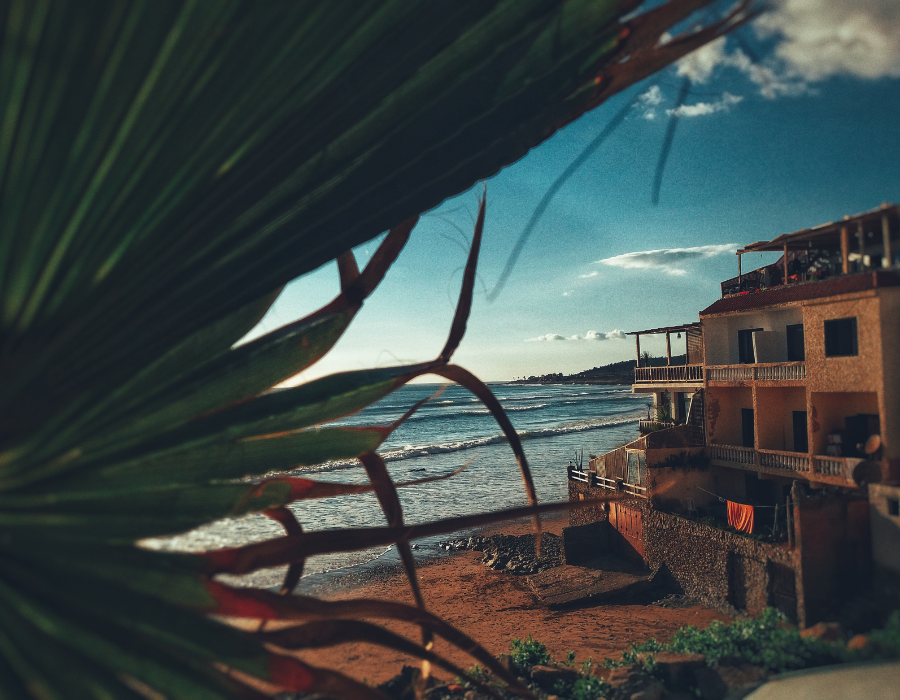
Note to travelling surfers
- Ecosystem first. Be kind to the environment you’re visiting: don’t leave any trash behind.
- Be kind to locals. Every lineup has an order and it was earned over years. Wait your turn, and respect local etiquette.
- Fly less, stay longer. The flight is the biggest impact of any surf trip. Two weeks once beats one week twice!
The best surfing destinations in Africa are Morocco, South Africa, Namibia, Senegal and Mauritius. Morocco is the most accessible, with a run of right hand points around Taghazout and a season from October to March. South Africa is the road trip continent in miniature, with Jeffreys Bay firing from May to September. Namibia is the remote mission, Senegal is warm water surf with a strong culture, and Mauritius delivers tropical reefs from May to October. Between them they cover almost every wave type and every level.
Africa is pure surf adventure: long right hand points, empty beaches that look like they belong on a postcard, and sessions where you finish salty, sun warmed and fully convinced you just scored something special. These five were chosen for reliable seasonal swell windows, enough spots nearby to adapt when the wind and tide change, options across different levels, and a surf scene developed enough to make travel smooth.
- 1. Morocco
- 2. South Africa
- 3. Namibia
- 4. Senegal
- 5. Mauritius
- 6. Interacting with locals and culture
- 7. Other great surf destinations in Africa
- 8. Frequently asked questions

Morocco
Morocco is an easy win for an Africa surf trip. It has real surf towns, plenty of right hand points, and a vibe that is as much about mint tea and sunsets as it is about scoring waves. It is also very movable: if one spot is too big or windy, you can usually drive 10 to 30 minutes and find a better setup.
Agadir is the gateway airport, and the whole Taghazout to Imsouane stretch is within an hour or so of it. Water sits around 17 to 21 degrees, so a 3/2 wetsuit covers the season.
Best surf spots in Morocco
| Surf town or zone | Best surf spots | Typical wave size (m) | Best season | Water temp (°C) |
|---|---|---|---|---|
| Taghazout area | Anchor Point, Killer Point | 1.0 to 4.0 | Oct to Mar | 17 to 21 |
| Imsouane | The Bay | 0.8 to 2.5 | Sep to Apr | 17 to 21 |
| Tamraght and the Banana zone | Banana Beach | 0.5 to 2.0 | Year round, best autumn to spring | 17 to 22 |
Which surfer levels is Morocco best for?
Morocco is brilliant for progression: there are mellow options, but also serious points when it is pumping.
| Level | Best seasons (Morocco) | What to expect |
|---|---|---|
| Beginner | Apr to Sep | Smaller surf and softer days, easier learning windows. |
| Intermediate | Sep to Nov, Mar to Apr | Cleaner lines and more consistency without non stop big days. |
| Advanced | Nov to Mar | Point breaks with real power and longer, faster rides. |
Morocco also shows up in our month guides for October and March if you are planning around a specific window.

Shampoo, body and face wash, all in one bar. Cooling, refreshing and designed for those always on the go.

South Africa
South Africa is a full surf universe: long points, punchy beach breaks, reefs and serious swell. It is also one of the best places anywhere to do a proper surf road trip, because the coastline is stacked with options if you are willing to drive.
Water temperature swings a lot by region. Cape Town is cold at 10 to 16 degrees and needs a 4/3 with a hood, while Durban on the Indian Ocean side runs 20 to 25 degrees and is often a shorty. Jeffreys Bay sits in between.
Best surf spots in South Africa
| Surf town or zone | Best surf spots | Typical wave size (m) | Best season | Water temp (°C) |
|---|---|---|---|---|
| Jeffreys Bay | Supertubes and the points | 1.0 to 4.0 | May to Sep | 15 to 20 |
| Cape Town | Muizenberg and nearby reefs and beaches | 0.5 to 3.0 | Mar to Oct | 10 to 16 |
| Durban | Beach breaks and points | 0.8 to 3.0 | May to Sep | 20 to 25 |
Which levels is South Africa best for?
South Africa can work for everyone, but it really rewards surfers who like variety and do not mind a bit of ocean energy.
| Level | Best seasons (South Africa) | What to expect |
|---|---|---|
| Beginner | Nov to Mar in many regions | Warmer water in some areas and smaller, friendlier days. |
| Intermediate | Mar to May, Sep to Nov | A great mix: swell still shows, but it is often more manageable. |
| Advanced | May to Sep | Peak swell energy in many zones, proper point and beach break days. |
Jeffreys Bay is a headline act in our July and August guides.

Namibia
Namibia is for surfers who want that end of the road feeling. It is less about surf cafes and more about wide open coastlines, big skies, and sessions that feel like you found them yourself. When it is good it can be unforgettable, but you will want to plan with respect for the conditions and the logistics.
The Benguela current keeps the water cold year round at 10 to 16 degrees, so a 4/3 or 5/4 with a hood and booties is not optional. Distances between anything are long, so a 4x4 and a plan matter more here than at any other destination on this list.
Best surf spots in Namibia
| Surf town or zone | Best surf spots | Typical wave size (m) | Best season | Water temp (°C) |
|---|---|---|---|---|
| Skeleton Coast remote zones | Remote beach and reef setups | 1.0 to 5.0 | May to Sep | 10 to 16 |
| Swakopmund area | Beach breaks, varies | 0.8 to 3.5 | May to Oct | 10 to 16 |
| General exposed coast | Long beach breaks | 1.0 to 4.5 | Winter swell season | 10 to 16 |
Which surfer levels is Namibia best for?
Namibia is mostly a mission destination: remote, powerful, and not always beginner friendly.
| Level | Best seasons (Namibia) | What to expect |
|---|---|---|
| Beginner | Not ideal as a first trip | Better as a future goal, with guidance and mellow day planning. |
| Intermediate | Apr and May, Sep and Oct | Potential for quality without constant maxed out swell. |
| Advanced | May to Sep | Stronger swell season and the best chance of serious sessions. |
Shower gel bottles are bulky and unkind to the places we travel to, and there is enough plastic in the ocean as it is. That is partly why I started Rinsed™: pocket sized bars so you can get fresh anywhere you go, even when your accommodation is a tent on the Skeleton Coast. A bar also skips the airport liquid rules, which we cover in can you take soap on a plane.

Shampoo, body and face wash, all in one bar. Keep your hair and skin healthy on the go. Monoï-infused scent with a touch of vanilla. Designed for those always on the go.

Senegal
Senegal is a great pick if you want warm water, culture, and a surf scene that feels welcoming. It is often more relaxed than the heavy hitter destinations, but it can still deliver quality waves, especially if you time the swell and wind properly.
Dakar sits on a peninsula that catches swell from several directions, which means there is nearly always somewhere working within a short drive. Water runs 22 to 26 degrees, so a shorty or boardshorts is plenty.
Best surf spots in Senegal
| Surf town or zone | Best surf spots | Typical wave size (m) | Best season | Water temp (°C) |
|---|---|---|---|---|
| Dakar and Ngor | Ngor Island | 0.8 to 3.0 | Nov to Mar | 22 to 26 |
| Dakar | Ouakam area breaks | 0.8 to 3.0 | Nov to Mar | 22 to 26 |
| Popenguine area | Beach and reef setups, varies | 0.5 to 2.5 | Nov to Mar | 22 to 26 |
Which surfer levels is Senegal best for?
Senegal is a strong pick if you want fun, warm and surfable, especially if you like a trip with personality beyond just the surf.
| Level | Best seasons (Senegal) | What to expect |
|---|---|---|
| Beginner | Apr to Oct | Friendlier surf windows and warm water. |
| Intermediate | Oct to Dec, Mar to Apr | More consistent swell without going full power every day. |
| Advanced | Nov to Feb | Best swell energy for the more serious breaks. |

Mauritius
Mauritius is a solid option if you want clear water, beautiful scenery and reef breaks that can be world class on the right day. Choosing the correct spot for your level matters a lot here, because reefs do not forgive the way sand does, but it is the kind of trip that feels special the moment you land.
Le Morne on the southwest coast is the main event, working on the same May to October Indian Ocean swell season that lights up Indonesia. Reef booties are worth packing.
Best surf spots in Mauritius
| Surf town or zone | Best surf spots | Typical wave size (m) | Best season | Water temp (°C) |
|---|---|---|---|---|
| Southwest coast | Le Morne and nearby reefs | 1.0 to 4.0 | May to Oct | 22 to 26 |
| North reef zones | Reef passes, varies | 0.8 to 3.5 | May to Oct | 22 to 26 |
| Beginner friendly corners | Sheltered lagoons on small days | 0.3 to 1.5 | Nov to Apr | 24 to 28 |
Which surfer levels is Mauritius best for?
Mauritius is best when you are honest about your reef comfort and pick waves that match your confidence.
| Level | Best seasons (Mauritius) | What to expect |
|---|---|---|
| Beginner | Nov to Apr, smaller | More mellow days and warmer water, but still be reef aware. |
| Intermediate | Apr to Jun, Sep to Oct | Good blend of swell and manageable conditions. |
| Advanced | Jun to Aug | Peak power and the best chance of top quality reef sessions. |
Shampoo, body and face wash, all in one bar. Cooling, refreshing and designed for those always on the go.

Interacting with locals and culture
Surf trips in Africa hit different when you lean into the local rhythm, not just the swell. A lot of the best sessions come with a side of community, whether that is sharing a lineup with local surfers, chatting to fishermen on the beach, or getting tips from the people who know the tides and winds best.
The simple approach is the best one: show respect in the water, be friendly without being pushy, learn a few basic words in the local language, and support local surf schools, guides, cafes and shapers when you can. Ask before filming people, keep your voice and your vibe calm in the lineup, and treat each spot like you are a guest, because you are.
Packing light helps too, especially on trips with internal flights and long drives. One solid bar means no plastic bottle to leak or leave behind, and if you are weighing up the options we broke it down in shampoo bar vs soap bar vs 3-in-1.

Other great surf destinations in Africa
| Other destination | Typical wave size (m) | Best season | Water temp (°C) | Vibe |
|---|---|---|---|---|
| Ghana | 0.5 to 2.5 | Apr to Oct | 25 to 28 | Warm water, mellow scenes, culture heavy trip. |
| Cape Verde | 1.0 to 5.0 | Nov to Mar | 22 to 26 | Punchy Atlantic islands, serious waves when it is on. |
| Mozambique | 0.8 to 3.5 | Apr to Oct | 23 to 27 | Warm water points and a quieter feel. |
| Kenya | 0.5 to 3.0 | May to Oct | 25 to 28 | Reef breaks, warm water, mixed consistency. |
Summary
Africa is the kind of surf continent where you can build the trip around the exact experience you want. Morocco is the smooth, easygoing point break playground. South Africa is the full road trip surf universe. Namibia is the proper adventure mission. Senegal is warm water culture with real waves. Mauritius brings that tropical reef setup when you want something that feels like a dream trip. Take your pick.
Looking further afield? We also cover the best surfing destinations in Europe, Asia, Central America and South America.
Frequently asked questions
Which country in Africa has the best surf?
South Africa has the highest quality waves in Africa, with Jeffreys Bay widely considered one of the best right hand point breaks in the world. Morocco is the better choice for a first trip though, because it is easier to reach from Europe, cheaper, warmer and far more forgiving across different levels.
When is the best time to surf in Africa?
It depends on the coast. Morocco and Senegal are best from October to March on North Atlantic swell. South Africa, Namibia and Mauritius peak from May to September or October on Southern Ocean swell. That means there is somewhere in Africa working in every month of the year.
Is Africa good for beginner surfers?
Yes, in the right places. Imsouane and Banana Beach in Morocco, Muizenberg near Cape Town, the Popenguine area in Senegal and the sheltered lagoons of Mauritius all suit beginners. Namibia and the exposed points of South Africa are not the place to learn.
Do I need a wetsuit to surf in Africa?
In most places yes. Morocco needs a 3/2, South Africa ranges from a shorty in Durban to a 4/3 with a hood in Cape Town, and Namibia needs a 4/3 or 5/4 with booties year round. Senegal and Mauritius are warm enough for boardshorts or a shorty.
What should I pack for an African surf trip?
A wetsuit matched to the region, reef booties for Mauritius, a quick dry towel, plenty of sun protection and a solid wash bar rather than bottles. A 3-in-1 bar covers shampoo, body wash and face wash in one 80g piece and lasts 30 to 60 washes, which is useful when you are moving between guesthouses and camps.
Can I take a soap bar in my hand luggage?
Yes. Solid soap and shampoo bars are not liquids, gels or aerosols, so they do not count towards the 100ml hand luggage allowance and do not need a clear plastic pouch. That is handy on trips with small internal flights and tight baggage rules. More detail in our guide on taking soap on a plane.
Pack lighter for your next surf trip
Shampoo, body and face wash in one 80g bar. No bottles to leak through your boardbag, no liquid limits at the airport, and 30 to 60 washes per bar.
Travel with Rinsed™ →30 day money back guarantee, no questions asked.
Alexandre
Founder @Rinsed™
Hey, I’m Alexandre! I started Rinsed™ for people like myself: sporty, hardworking and always on the go. Check out our bars!