
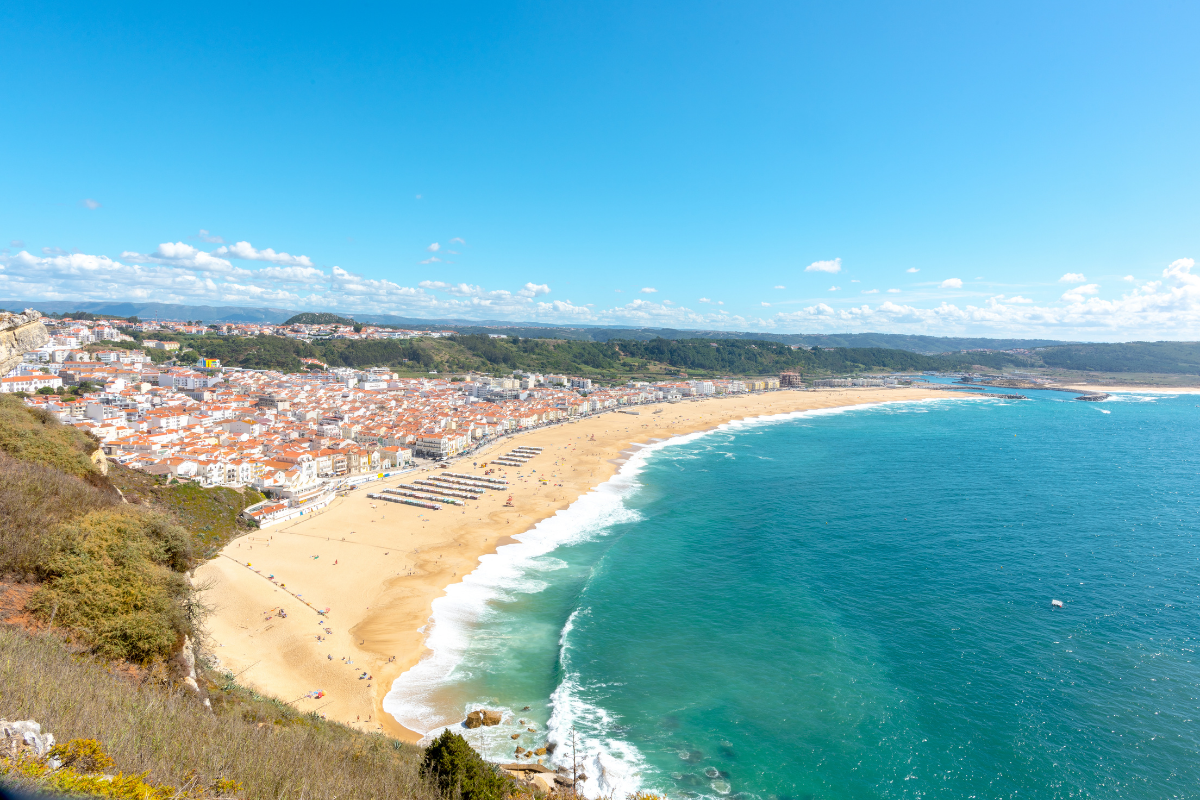
Note to travelling surfers
- Ecosystem first. Be kind to the environment you’re visiting: don’t leave any trash behind.
- Be kind to locals. Every lineup has an order and it was earned over years. Wait your turn, and respect local etiquette.
- Fly less, stay longer. The flight is the biggest impact of any surf trip. Two weeks once beats one week twice!
The best surfing destinations in Europe are Portugal, northern Spain, southwest France, the west coast of Ireland and northern Scotland. Portugal is the safest all round bet because it has waves year round and a spot that works in almost any wind. France has the most powerful beach breaks, northern Spain pairs good surf with city life, and Ireland and Scotland offer the wildest, emptiest cold water sessions. Autumn, roughly September to November, is the best season across most of the continent: the swell picks up, the water still holds some summer warmth, and the crowds have gone home.
Europe is way more surf rich than it gets credit for: you can chase mellow longboard days, punchy beach break barrels, or rugged reef missions, all without leaving the continent.
This guide outlines the best surfing destinations in Europe, based on number of surf spots, wave variety and year-round consistency.
Let's (duck)dive into it!
- 1. Portugal
- 2. Spain
- 3. France (Southwest)
- 4. Ireland (West Coast)
- 5. Scotland (North and West)
- 6. Other European surf destinations
- 7. Summary / conclusion
- 8. Frequently asked questions

Portugal
Portugal is the easy yes for Europe surf trips because there are waves year round and you can usually find a spot that works even if the wind changes.
It’s also great for mixed groups, because you can pair beginner beaches with more serious performance waves in the same region.
Best surf spots in Portugal
| Surf town or zone | Best surf spots | Typical wave size (m) | Best season |
| Peniche and Baleal | Supertubos, Baleal beaches | 0.5 to 3.5 | Sep to Apr |
| Ericeira | Ribeira d’Ilhas, Coxos | 0.8 to 4.0 | Sep to Apr |
| Algarve | Arrifana, Amado | 0.5 to 3.0 | Oct to Mar |
For which surf levels is Portugal best for?
Portugal is a rare “everyone wins” surf country, because you can almost always find a wave that matches your confidence level.
| Level | Best seasons (Portugal) | What to expect |
| Beginner | May to September | Smaller surf on average, warmer water, friendlier learning days. |
| Intermediate | March to May, September to November | Better consistency without as many maxed-out days. |
| Advanced | October to March | Bigger, more powerful Atlantic swells and heavier waves. |
Moving north along the Atlantic, Spain keeps that swell energy but changes the coastline feel completely.
Is Portugal appealing to you? Read our guide with the best surfing destinations in Portugal.

Shower gel bottles are really bulky and unkind to the places we travel to: there's enough plastic in the ocean as it is! That's partly why I started Rinsed™: pocket-sized bars to be fresh anywhere I go!

Shampoo, body and face wash, all in one bar. Cooling, refreshing and designed for those always on the go.
Spain
Northern Spain is a solid pick if you want culture and surf in the same day.
You’ll find a mix of beach breaks, reefs, and standout setups, and autumn often brings more consistent swells while the weather still feels pretty friendly.
Best surf spots in Spain
| Surf town or zone | Best surf spots | Typical wave size (m) | Best season |
| Basque Coast (San Sebastián area) | Zurriola, Zarautz | 0.5 to 3.0 | Sep to Dec |
| Mundaka area | Mundaka, Laida | 0.8 to 4.0 | Sep to Mar |
| Asturias | Rodiles and nearby beaches | 0.8 to 3.0 | Sep to Apr |
For which surf levels is Spain best for?
Spain is best for surfers who like variety, with some zones feeling very accessible and others getting serious fast when swell jumps.
| Level | Best seasons (Northern Spain) | What to expect |
| Beginner | June to September | Usually smaller, more forgiving beach days. |
| Intermediate | September to November, March to May | More consistent surf with manageable size. |
| Advanced | October to March | Stronger swells and more “proper” days at the standout breaks. |
Keep heading up the Bay of Biscay and you land in France, where beach breaks can be playful one day and wild the next.
Read our full guide about the best surfing destinations in Spain here!

France (Southwest)
Southwest France is legendary: powerful Atlantic swell, world famous sandbanks, and deep surf culture around towns like Hossegor and Biarritz.
Late summer through autumn is the sweet spot when consistency improves but the water’s still got some warmth.
Best surf spots in France
| Surf town or zone | Best surf spots | Typical wave size (m) | Best season |
| Hossegor and Seignosse | La Gravière, La Nord, Les Estagnots | 0.8 to 3.5 | Aug to Nov |
| Biarritz and Anglet | Côte des Basques, Grande Plage, Anglet beaches | 0.5 to 3.0 | Apr to Nov |
| Capbreton | La Piste and nearby peaks | 0.6 to 3.0 | Sep to Nov |
For which surf levels is France best for?
France is a dream if you love beach breaks, but it rewards good positioning and confidence because the ocean can turn it up fast.
| Level | Best seasons (Southwest France) | What to expect |
| Beginner | June to August | Friendlier surf on average; best for lessons and repetition. |
| Intermediate | September to November, April to May | Great mix of quality + manageable size. |
| Advanced | October to February | More heavy days, more hollow surf, more “serious” sessions. |
If you want the raw Atlantic version of Europe, Ireland is where it gets properly wild and beautiful.
Want to read more about French surf spots? Read our guide with the best surfing destinations in France.

Ireland (West Coast)
Ireland is for surfers who like rugged coastlines and don’t mind a bit of weather.
The scenery is unreal, the swells can be powerful, and every session feels like an adventure. It’s cold-water surfing, so neoprene is part of the deal.
Best surf spots in Ireland
| Surf town or zone | Best surf spots | Typical wave size (m) | Best season |
| Donegal | Bundoran area breaks | 1.0 to 4.0 | Sep to Mar |
| Sligo | Strandhill | 0.8 to 3.5 | Sep to Mar |
| Kerry | Dingle and nearby reefs | 1.0 to 4.5 | Oct to Mar |
For which surf levels is Ireland best for?
Ireland is best for surfers who are comfortable with moving conditions and stronger swells, but there are still beginner-friendly days if you choose the right beach at the right tide.
| Level | Best seasons (Ireland) | What to expect |
| Beginner | June to August | Your best odds for smaller, more forgiving conditions. |
| Intermediate | September to November, March to May | Solid swell without the harshest winter extremes. |
| Advanced | October to March | Biggest swells, most intense conditions, most reward on good days. |
Cold water trips are where a compact wash kit really earns its place. If you are flying with hand luggage only, our guide on taking soap on a plane explains why a solid bar never gets stopped at security.

Shampoo, body and face wash, all in one bar. Keep your hair and skin healthy on the go. Monoï-infused scent with a touch of vanilla. Designed for those always on the go.

Scotland (North and West)
Scotland is cold-water surfing with big character. The vibe is often quieter than the main European hotspots, the scenery is next level, and the best days can be genuinely high quality. It’s not the easiest destination, but it’s a memorable one.
Best surf spots in Scotland
| Surf town or zone | Best surf spots | Typical wave size (m) | Best season |
| Thurso (north) | Thurso East | 1.5 to 4.0 | Sep to Apr |
| West coast | Road-access beaches and reefs (varies) | 0.8 to 3.0 | Sep to Mar |
| East coast (select days) | Exposed beach breaks | 0.5 to 2.0 | Sep to Mar |
For which surf levels is Scotland best for?
Scotland is best for surfers who don’t mind a mission and want something different from the usual European surf trip checklist.
| Level | Best seasons (Scotland) | What to expect |
| Beginner | June to August | Smaller surf windows and slightly kinder conditions. |
| Intermediate | September to November, March to May | Better swell frequency with fewer fully maxed-out days. |
| Advanced | October to March | Most consistent swell and the best chance of proper power. |
For more surfing destinations in Scotland and the UK, read our full guide outlining the best surfing destinations in the UK.

Other European surf destinations
Europe has loads more surf than just the big five. Here are extra picks for quick inspiration (all approximate).
| Other destination | Typical wave size (m) | Best season | Vibe |
| Canary Islands (Spain) | 0.8 to 3.0 | Oct to Mar | Warm winter escape with lots of breaks. |
| Wales (UK) | 0.5 to 3.0 | Sep to Mar | Consistent Atlantic energy with friendly beaches. |
| Norway (Unstad, Lofoten) | 0.8 to 3.0 | Sep to Mar | Cold-water novelty, serious scenery, serious gear. |
| Italy (Sardinia) | 0.5 to 2.5 | Oct to Apr | Mediterranean storms, quieter lineups, lots of variety. |

Summary / conclusion
Europe’s surf is basically one big choose-your-own-adventure. If you want the highest odds of scoring with minimal hassle, Portugal is the safest all-round bet.
If you want culture and consistent Atlantic energy, northern Spain and southwest France are the sweet spot (with France bringing the punchiest beach breaks).
If you’re chasing the raw, wild stuff and don’t mind cold water missions, Ireland and Scotland deliver proper adventure sessions and dramatic coastlines.
Either way, they're plenty of destinations to choose from!
Frequently asked questions
Where is the best place to surf in Europe?
Portugal, for most surfers. It has waves all year, a huge number of spots between Peniche, Ericeira and the Algarve, and enough variety that beginners and advanced surfers can travel together. Southwest France has more powerful beach breaks, and northern Spain is the pick if you want a city on your doorstep.
When is the best time to surf in Europe?
September to November. Atlantic swell becomes far more consistent from September, the water still holds summer warmth, and the summer crowds have gone. Winter, from October to March, brings the biggest and most powerful surf, which suits advanced surfers.
Where can beginners surf in Europe?
June to September is the beginner window almost everywhere in Europe, because the surf is smaller and the water is warmer. Portugal between May and September, the Basque beaches of northern Spain in summer, and southwest France from June to August are the most forgiving options.
Do you need a wetsuit to surf in Europe?
In most of Europe, yes, for most of the year. Portugal and the Canary Islands are the exceptions where you can sometimes get away with boardshorts in high summer. Ireland, Scotland and Norway are proper cold water, so a good wetsuit, boots and often a hood are part of the kit.
Which European country has the most surf spots?
Portugal, with surfable coastline running almost the entire length of the country, from the north through Peniche and Ericeira down to the Algarve. Spain and France follow, with France concentrated along the southwest Atlantic coast.
Can you surf in Europe in winter?
Yes, and winter is when the best waves arrive. October to March brings the biggest Atlantic swells to Portugal, France, Ireland and Scotland. It is cold and the surf is heavier, so it suits confident surfers. For warmth in winter, the Canary Islands are the European answer.
Pack lighter for your next surf trip
One 80g bar for hair, body and face. No bottles to leak through your boardbag, no liquid limits at the airport, and 30 to 60 washes per bar.
Travel with Rinsed™ →30 day money back guarantee, no questions asked.
Alexandre
Founder @Rinsed™
Hey, I’m Alexandre! I started Rinsed™ for people like myself: sporty, hardworking and always on the go. Check out our bars!