

Note to travelling surfers
- Ecosystem first. Be kind to the environment you’re visiting: don’t leave any trash behind.
- Be kind to locals. Every lineup has an order and it was earned over years. Wait your turn, and respect local etiquette.
- Fly less, stay longer. The flight is the biggest impact of any surf trip. Two weeks once beats one week twice!
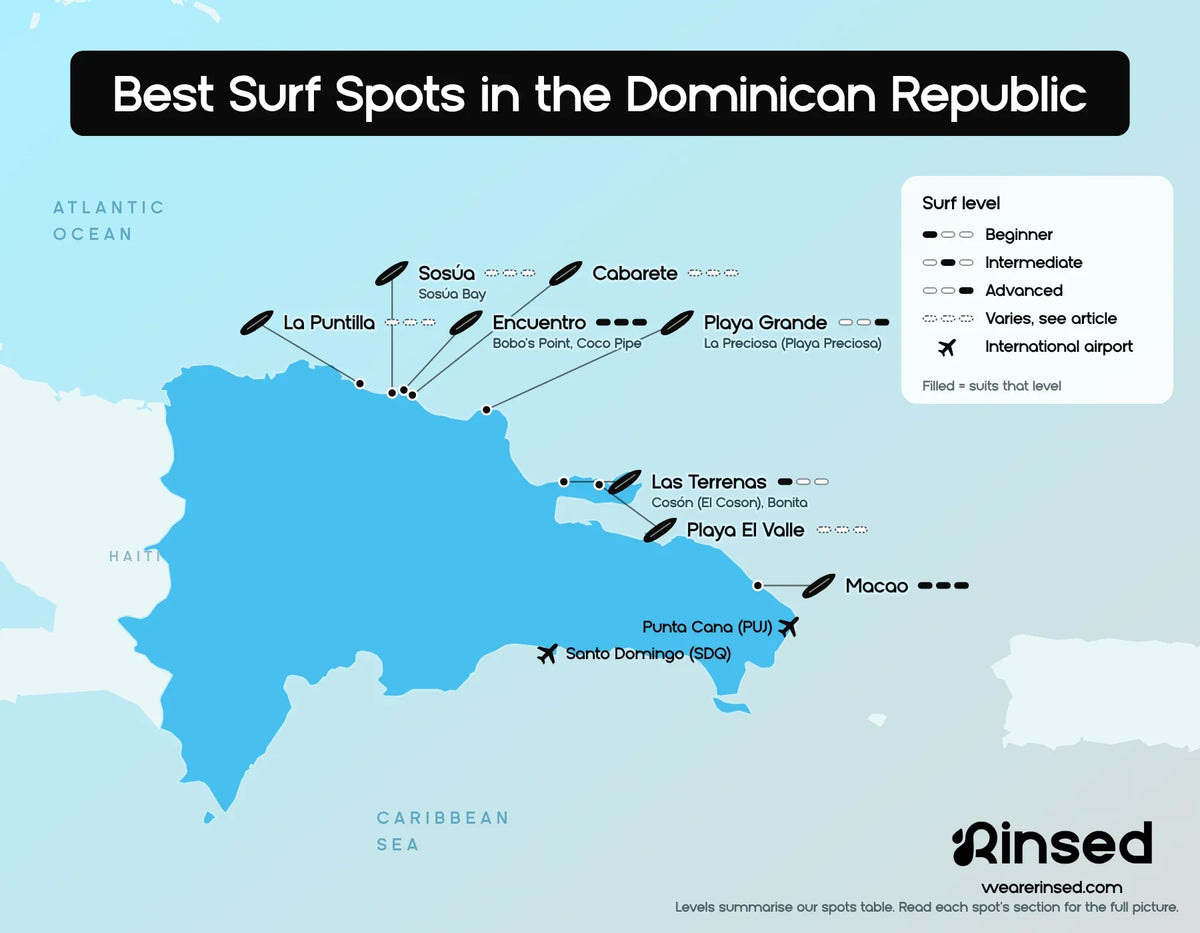
The best surf breaks in the Dominican Republic sit on the north coast: Playa Encuentro, with Bobo's Point and Coco Pipe, plus Cabarete and Sosúa Bay on the Amber Coast, La Puntilla in Puerto Plata, and Playa Grande and La Preciosa near Río San Juan; on the Samaná peninsula, Playa Cosón, Playa Bonita and Playa El Valle around Las Terrenas; and Playa Macao on the east coast near Punta Cana. Go between November and March, when North Atlantic swell reaches the island, and leave the wetsuit at home.
In June 2026 the Ministry of Tourism launched a campaign called "Cabarete Surf & Wind City", calling Playa Encuentro "the surfing mecca of the Dominican Republic". It does have something for almost everyone: whitewater for first lessons, a friendly peak for improvers, and reef waves that will humble a confident surfer on the wrong day. The rest of the coast is quieter, and slower. This guide is part of our wider guide to the best surfing destinations in Central America and the Caribbean, and it sits next to our guide to surfing in Guadeloupe and Martinique, which catch the same winter swells further south.
What are the best surf spots in the Dominican Republic?
This table covers twelve breaks we could verify on surf forecasters' break pages, surf guides and the island's own tourism sources, from beginner beaches to shallow reefs. "Works best on" comes from the surf forecasters' break pages unless the spot's section says otherwise. Levels come from surf schools, lodges and surf guides where they give one; where nobody does, we say so. "Best months" follows the surf guides' winter window of November to March unless a spot behaves differently.

| Spot | Area | Type | Level | Works best on | Best months |
|---|---|---|---|---|---|
| Playa Encuentro (La Derecha) | Encuentro, between Sosúa and Cabarete | Reef, main peak with rights and lefts | All levels (whitewater inside for beginners) | NNE swell, S wind, any tide | November to March |
| Bobo's Point | Encuentro, between Sosúa and Cabarete | Series of peaks, lefts and rights | Beginner to intermediate | NE swell, low to mid tide | November to March, smaller in summer |
| Coco Pipe | Encuentro, between Sosúa and Cabarete | Hollow reef, lefts and rights | Advanced (shallow reef) | NE swell, SSW wind | November to March |
| Cabarete | Cabarete town | Reef and beach, lefts and rights | Not stated (submerged rocks) | NE swell, light SW wind, all tides | Winter, when the trade winds ease |
| Sosúa Bay | Sosúa | Reef, rights | Not stated (rocks, urchins) | Big N swell, SE wind | Only on big winter swells |
| La Puntilla | Puerto Plata | Reef, right | Not stated by the sources | NNE swell, S wind | November to March |
| Playa Grande | Río San Juan | Reef, rights | Not stated by the sources | N swell, SE wind, any tide | November to March |
| La Preciosa (Playa Preciosa) | Río San Juan | Outer reef, lefts and rights | Expert | N swell, SE wind, around high tide | Winter swells, also works in summer |
| Playa Cosón (El Coson) | Las Terrenas, Samaná | Beach break with a reef point, rights | Not stated (rocks at the point) | N swell, S wind | October to March |
| Playa Bonita | Las Terrenas, Samaná | Long, shallow sand and reef shelf | Beginners | Big N to NE swell that is too big elsewhere | November to March |
| Playa El Valle | Samaná, east of Las Terrenas | Shorebreak A-frames in a bay | Not stated (powerful shorebreak) | Swell over about eight feet | November to March |
| Playa Macao | Macao, east coast near Punta Cana | Beach break, lefts and rights | All levels (bigger on the left side) | N swell, SW wind | November to March |
The wind is the thing to watch here. The trade winds usually pick up as the day goes on, and the forecasters' long-term numbers show it: at Cabarete in October, its most consistent month, they count the surf blown out about 83% of the time. Encuentro does better, with clean waves about a third of the time, and the sheltered reefs at Sosúa and Río San Juan do better again. So the plan is almost always the same: surf early, then again in the late afternoon if the wind drops. Our guide on how to read a surf forecast helps you spot those windows.
Surfing at Playa Encuentro and Cabarete
Playa Encuentro is the heart of Dominican surfing: a reef beach about 5 km west of Cabarete Bay with several peaks, from beginner whitewater to hollow reef. It sits between Sosúa and Cabarete and is reached by dirt road, and the surf lodges on the beach call it the most consistent surf spot on the island.
The peaks have local names you'll hear in the car park. La Derecha, the main peak, is the one the forecasters treat as "Encuentro": an exposed reef break with the right as the better wave and a left too, best on a north-north-east swell with a southerly offshore wind, and not fussy about the tide. Wikipedia describes it as the North Coast's most consistent spot, with an outside and an inside peak that work in almost any swell. A local surf lodge says its several peaks suit longboarders and shortboarders alike, with a large stretch of whitewater on the inside for first-timers.
Bobo's Point is the friendly one. Wikipedia describes a series of consistent peaks with an easy take-off, best at low to mid tide on a north-east swell, and the surf school that teaches there says beginners learn in the whitewater while intermediate and advanced surfers ride the clean faces further out. It gets powerful when it's overhead, so it isn't a beginner wave every day.
Coco Pipe is the opposite. It's a powerful, hollow reef break that often looks smaller from the beach than it really is, and the surf guides call it the most advanced wave on the beach, over shallow reef. The forecasters list urchins and rocks as its hazards. Between the two sits The Left (La Izquierda), a hollow reef left that surf guides rate for experienced intermediates and up, and at the far end Destroyer, a shallow left over sharp reef that Wikipedia calls dangerous. Neither is in our table because we couldn't pin their positions down well enough for the map.
The forecasters' hazard list for Encuentro reads like most Caribbean reefs: urchins, rips, rocks and sharks. It gets crowded when it's working, so arrive early and sit wide of the main peak if you're new.
Cabarete itself is better known for kites and windsurfers than for waves, which tells you a lot about the afternoons. The forecasters list a reef and beach break in town with lefts and rights, good at all tides, best on a north-east swell with a light south-westerly, with submerged rocks to watch for. Surf guides say the in-town wave is mostly a wedge and that it's worth checking in winter, when the wind eases and swings offshore.
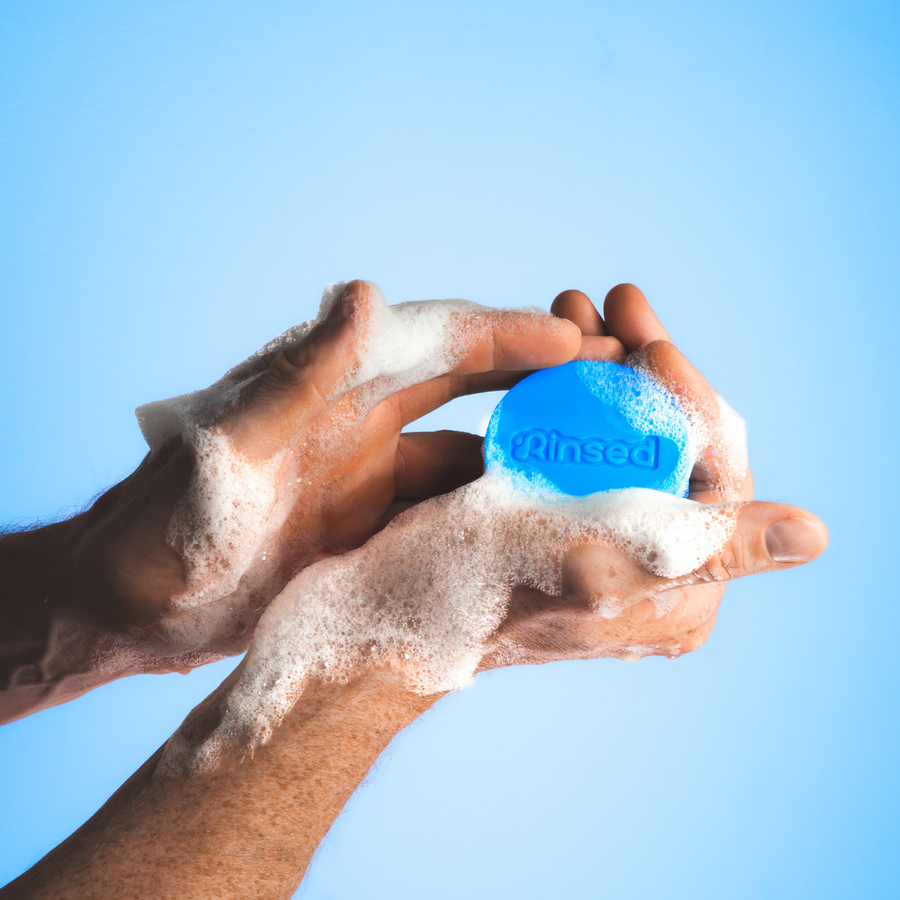
A trip like this means two sessions a day, a wet rash vest on the back seat and sand in everything. A solid bar for hair, body and face takes up almost no room in a damp wash bag and can't leak over the rest of your kit.

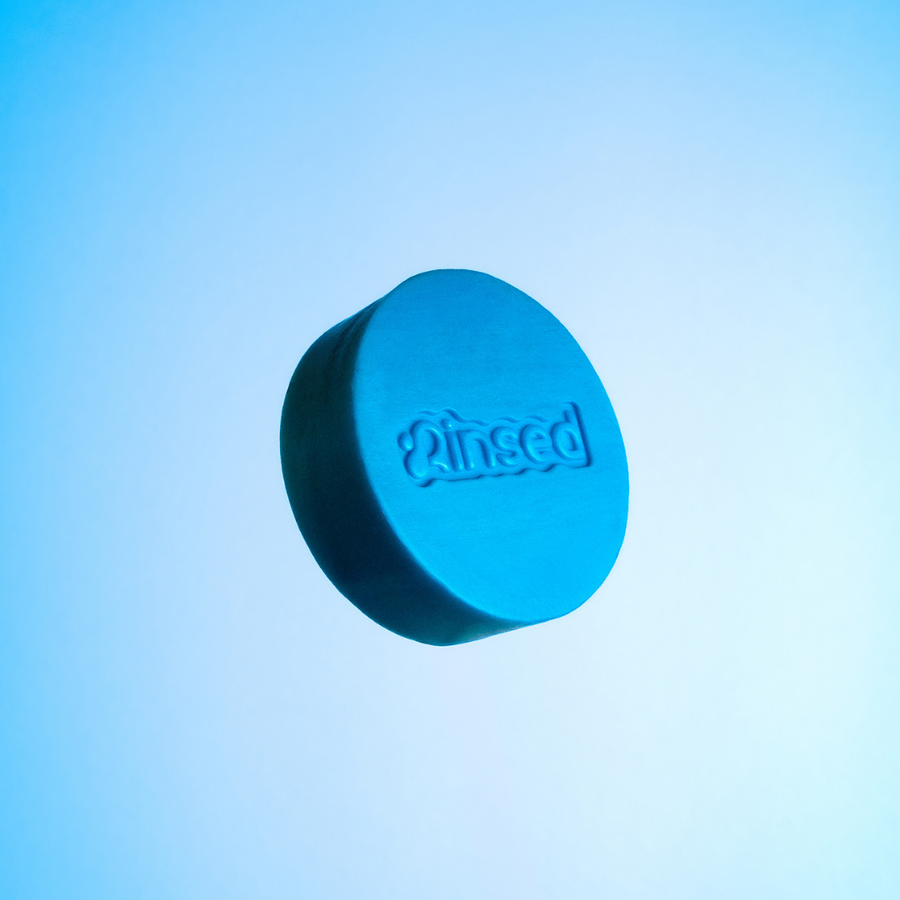
Shampoo, body and face wash, all in one bar. Cooling, refreshing and designed for those always on the go.
Encuentro is only the start of the coast.
Surfing in Sosúa and Puerto Plata
West of Encuentro, Sosúa Bay and La Puntilla in Puerto Plata are the big-swell options: they need more north in the swell, and on the right day they're worth the drive.
Sosúa Bay is a reef break with a right, best on a north swell with a south-easterly wind. The forecasters rate it very consistent on paper and say it's unlikely to be crowded, with urchins and rocks to watch for. Surf guides are more cautious: they say it only really gets going on big north swells, which is rare, and that it's a great wave but "no cinch". It's a spot to keep in mind for the rare days when a big north swell is running.
La Puntilla, just outside the harbour in Puerto Plata, is a right-hand reef break that works on a north-north-east swell with a southerly wind. The forecasters list urchins, rocks, coral and sharks, and say it is sometimes crowded. One surf guide adds a warning that's worth taking seriously: city pollution is a problem here, especially after rain. If it has poured overnight, we'd drive to Encuentro instead.
Surfing near Río San Juan: Playa Grande and La Preciosa
Further east along the coast, Río San Juan has two reef breaks side by side: Playa Grande and the more serious La Preciosa. SurferToday lists both among the north coast's spots east of Cabarete.
Playa Grande is listed by the forecasters as an exposed reef break with rights, best on a north swell with a south-east wind, and not affected by the tide. They rate it fairly consistent and say crowds are unlikely, with rocks to watch for.
La Preciosa is right next door, on the outer reefs. The forecasters describe left and right reefs, very consistent, best around high tide on a north swell with a south-easterly, and their hazard list is rocks, reef and urchins. Surf guides are blunt: it handles good size on winter swells, works in the summer off-season too, and is "experts only".
Surfing in Las Terrenas and the Samaná peninsula
On the Samaná peninsula, Las Terrenas has a small, laid-back surf scene: Playa Bonita for beginners, Playa Cosón for a bit more punch, and Playa El Valle for big days. Surf guides put the main season here at October to March.
Playa Bonita, west of town at Punta Bonita, is the learner's beach. Surf guides describe a long, shallow shelf of sand and reef that tames the biggest north and north-east swells, and call it "most certainly a wave at the beginner end of the spectrum". The paddle out isn't too rippy for most people, which is exactly what you want in your first week.
Playa Cosón, further west, is a long sandy beach with a reef point at its western end. The forecasters list "El Coson" as a beach and reef break with rights, best on a north swell with a southerly wind, unlikely to be crowded, with rocks to watch out for. Surf guides add that the seabed drops away faster here than at Bonita, so the sets have more power, and that big north swells can bring hollow morning waves before the trade winds turn cross-shore.
Playa El Valle, east of Las Terrenas in a bay flanked by cliffs, only comes alive on big swells: surf guides say that over about eight feet it throws short, makeable tubes, with a powerful shorebreak landing in the middle of the beach. It's remote, so go with your own car or an organised trip. No source gives it a level, but that shorebreak is not a place to learn.
Surfing in Macao, near Punta Cana
Playa Macao, north of the Punta Cana and Bávaro resort strip, is the east coast's surf beach, with surf schools on the sand and bigger waves at its left-hand end. The forecasters list it as an exposed beach break with lefts and rights, best on a north swell with a south-westerly wind, and not likely to be crowded.
A resort group's travel guide says Macao has surf schools for beginners, and that the waves get bigger on the left side of the beach, which is where more advanced surfers go. Beginners do their first steps on the sand, and intermediates go straight in once the instructor has seen them surf. The same guide mentions Uvero Alto, further north, as having the biggest waves around Punta Cana because of a reef offshore, but we couldn't confirm a specific break there, so it isn't in our table.
What about the south coast?
The Caribbean south coast has waves too, but it's much less reliable than the north. SurferToday lists Los Patos, El Chinchorro, Guibia in Santo Domingo, Playa Bahoruco and La Boya, and surf guides call the south coast "fickler" than the north. For a winter trip from Europe, it's a side trip at best.
When is the best time to surf in the Dominican Republic?
From November to March, when North Atlantic winter storms send swell south to the north coast. Surf guides say the swells start building in late September and grow into January, and a surf lodge in Encuentro puts the best conditions from September to the end of April. In summer, from about May to August, north-east swells still come through, but they're smaller and more wind-affected, which makes summer better for learning than for chasing waves.
You'll notice the forecasters' statistics name October as the most consistent month at most north coast breaks. October is also inside the Atlantic hurricane season, which the US National Hurricane Center gives as 1 June to 30 November, with the peak around 10 September and most activity from mid-August to mid-October. That's why we'd still plan a trip for December to March and treat October as a bonus month for people who can move fast.
Average sea temperatures below are long-term data for Sosúa on the north coast. The forecasters say a rash vest and board shorts are fine for surfing at any time of year.
| Months | Water, Sosúa | Surf | Wetsuit |
|---|---|---|---|
| December to February | 24.8 to 28.3°C | Peak winter swell season, trades in the afternoon | None, rash vest for the sun |
| March and April | 25.3 to 27.2°C | Swell easing, still good on the north coast | None, rash vest for the sun |
| May to August | 26.1 to 29.8°C | Smaller, windier waves, better for learning | None, rash vest for the sun |
| September to November | 27.8 to 30.3°C | Swell returns, hurricane season until 30 November | None, rash vest for the sun |
The ranges are the lowest and highest monthly figures recorded for each period. For more boardshort destinations, see our guide to the best places to surf without a wetsuit, and for a month by month view, our guides to the best surfing destinations in January and February.
Is the Dominican Republic good for beginner surfers?
Yes, at the right beaches and with a lesson: Bobo's Point and the inside at Encuentro, Playa Bonita in Las Terrenas and Playa Macao are all used by surf schools. Most of the other breaks in our table are reefs, and the forecasters warn about urchins and rocks at nearly every one of them, so reef boots are worth packing.
The US National Weather Service reminds swimmers that rip currents often form on calm, sunny days and to check local conditions before going in. If you're an intermediate looking at Coco Pipe, The Left or La Preciosa, watch a full session from the beach first.
Getting to the Dominican Republic from Amsterdam, Brussels and Paris
Pick your airport by the coast you want: Puerto Plata for Encuentro and Cabarete, Samaná El Catey for Las Terrenas, Punta Cana for Macao, with Santo Domingo as the capital's airport. All of them are long-haul from Europe, and the routes change from season to season.
From Amsterdam. When we checked in October 2026, KLM listed flights from Amsterdam to Punta Cana and Santo Domingo, though its page didn't say whether they were nonstop. TUI in the Netherlands described nonstop flights from Schiphol to Punta Cana, with a technical stop on the way back on the same plane.
From Paris. The French travel trade press listed direct winter 2025 to 2026 flights from Paris to Punta Cana with Air France, Air Caraïbes and Euroairlines, and from Orly to Santo Domingo with Air Caraïbes. Air Caraïbes itself announced a new direct Orly to Samaná El Catey route from 15 December 2025, as part of its winter schedule, with the return going via Santo Domingo, which is handy for Las Terrenas.
From Brussels. TUI fly, which used to fly Brussels to Punta Cana, stopped its long-haul flights from Brussels in 2025, and we couldn't confirm any other direct flight, so most Belgian readers will fly from Amsterdam or Paris. For the north coast, Puerto Plata's airport sits next to Sosúa, and the airline lists we checked showed no direct flights there from Amsterdam, Brussels or Paris, so expect to connect, or fly into Santo Domingo or Punta Cana and drive. Routes change, so check before you book.
Entry. The Dominican immigration service says every passenger, Dominican or foreign, has to fill in its free online E-Ticket form to enter and to leave the country. Check the official requirements for your passport before you travel.
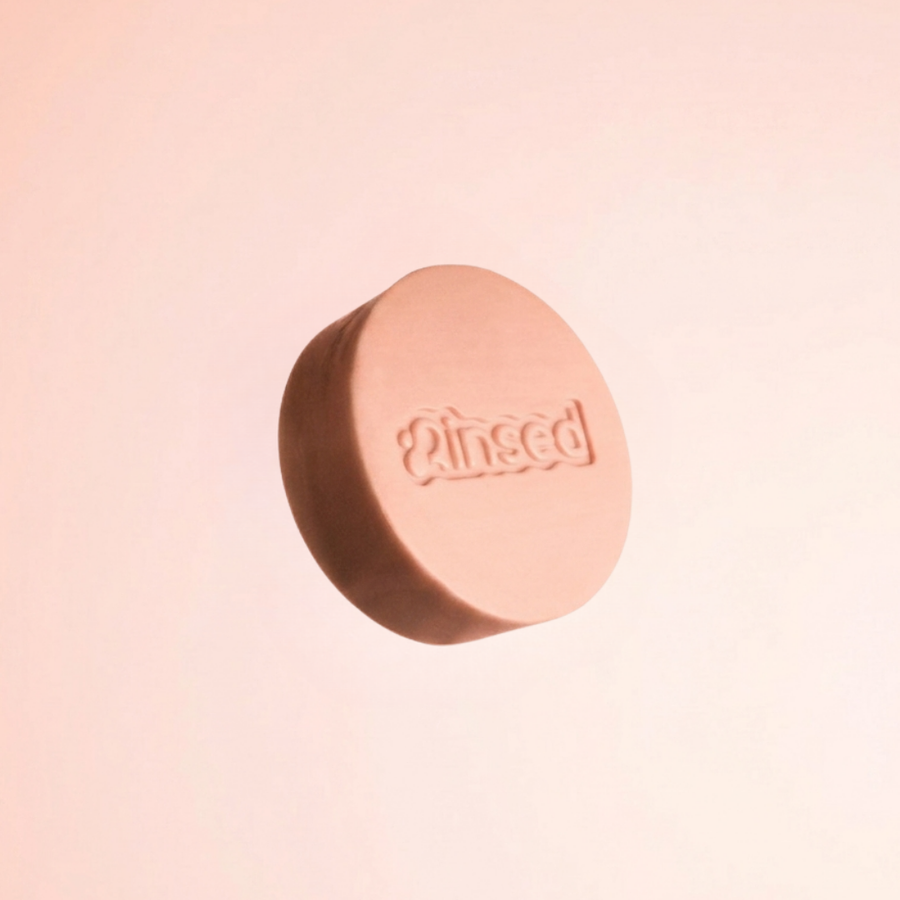
With a long flight and maybe a connection, every bit of hand luggage counts. One solid bar for hair, body and face isn't a liquid at airport security, so it stays out of the little plastic bag.

Shampoo, body and face wash, all in one bar. Keep your hair and skin healthy on the go. Monoï-infused scent with a touch of vanilla. Designed for those always on the go.
Our guides on whether you can take soap on a plane and on building a carry-on surf trip wash kit have the detail. Once you've landed, the next question is where to base yourself.
Where to stay for surfing in the Dominican Republic
Stay as close as you can to the waves you'll surf at dawn, because the wind decides your day.
- Cabarete: the obvious base for the north coast, with Encuentro about 5 km away, plenty of places to stay and the island's water sports scene on the doorstep.
- Encuentro: surf lodges by the beach let you check the peaks before breakfast.
- Sosúa: close to Puerto Plata's airport and to the big-swell reef in the bay, with Encuentro a short drive east.
- Río San Juan: quieter, for Playa Grande and La Preciosa, and a good stop between Cabarete and Samaná.
- Las Terrenas: for Playa Bonita, Playa Cosón and El Valle, and for a slower pace.
- Macao and Bávaro: if you're combining a Punta Cana holiday with lessons at Macao.
Surf guides say it's not the most relaxing driving you'll do abroad, so leave plenty of time between breaks.
Showers and washing up after a surf
Rinse off salt and sand at the beach if there's a tap, and save the soap for a shower with a proper drain. Don't rinse shampoo or soap directly into the ocean or into beach showers that drain to the sea. Lather only where the water goes into a drain: your surf lodge, guesthouse or hotel bathroom.
With reefs right off most of these beaches, that matters even more. Our guides on how to rinse off after a surf and on sunscreen rules for surf trips are worth a read before you go. Back in your room, one bar does hair, body and face, so there's only one thing on the shelf.
Shampoo, body and face wash, all in one bar. Cooling, refreshing and designed for those always on the go.
Pack it in a small tin or bag between lodges, and nothing in your wash bag can leak over the rest of your luggage.
Sargassum seaweed: what surfers should know
Sargassum seaweed washes up on Caribbean beaches, mostly in summer, so the winter surf season is usually the better time. The University of South Florida's sargassum outlook for August 2026 said amounts were falling and expected them to keep dropping until about November, with beaching around the Caribbean continuing but less severe than in summer. It doesn't cover individual beaches, so check locally.
We couldn't find an official Dominican health advisory on sargassum. In the French Antilles, the regional health agency in Martinique explains that heaps of seaweed rotting on the beach release hydrogen sulphide gas, which can irritate the eyes and airways. It advises staying away from beaches with rotting heaps, not handling or walking on decomposing seaweed, and respecting any zones closed for clean-up. If your break is covered, pick another one.
Surfing in the Dominican Republic: locals and the environment
Respect the locals
Encuentro is small and busy when it's good, and the forecasters say several of these spots get crowded when they're working. Sit where your level belongs: the whitewater and Bobo's if you're learning, the main peak if you can hold your line, and leave Coco Pipe and La Preciosa to the people who surf them every week. Don't drop in, don't snake, and paddle wide of the peak. Our surf etiquette guide covers the rest.
Respect the environment
The reefs are the reason these waves exist. Don't stand on coral, take every bit of rubbish back with you, and keep soap and shampoo out of the sea.
Summary
The Dominican Republic is a warm-water winter surf trip built around the north coast. Base yourself in Cabarete, surf Encuentro at dawn, use Sosúa Bay and Puerto Plata on big north swells, and drive east to Río San Juan or the Samaná peninsula for quieter waves. Go between November and March, pack a rash vest and reef boots rather than a wetsuit, and plan your flights around the coast you want. For more Caribbean waves, compare it with Guadeloupe and Martinique, or browse our guide to warm-water winter surf escapes.
Frequently asked questions
Where is the best surfing in the Dominican Republic?
On the north coast. Playa Encuentro, between Sosúa and Cabarete, is the main surf beach, with several peaks from beginner whitewater to hollow reef. Sosúa Bay, Puerto Plata, Río San Juan and Las Terrenas add more options.
Is Playa Encuentro good for beginners?
Yes, with a lesson. A local surf lodge says the large whitewater area on the inside is ideal for first-timers, and Bobo's Point is the friendlier peak for improvers. Coco Pipe and The Left are for experienced surfers.
Where can beginners surf near Las Terrenas?
Playa Bonita. Surf guides describe a long, shallow shelf that tames the bigger swells and put it firmly at the beginner end of the spectrum.
Can you surf in Punta Cana?
Yes, at Playa Macao, north of the resort strip. It's a beach break with surf schools for beginners, and the waves get bigger at the left-hand end of the beach.
When is the best time to surf in the Dominican Republic?
November to March, when North Atlantic winter swells reach the north coast. Summer brings smaller, windier waves that suit beginners better.
When is hurricane season in the Dominican Republic?
The US National Hurricane Center gives the Atlantic hurricane season as 1 June to 30 November, with the peak around 10 September.
Do you need a wetsuit to surf in the Dominican Republic?
No. Long-term averages for Sosúa range from about 26°C in February to about 29°C in September, and the forecasters say a rash vest and board shorts are fine all year.
What time of day is best for surfing on the north coast?
Early morning. The trade winds usually pick up later in the day and blow the waves out, so dawn and evening sessions tend to be cleanest.
Which airport is closest to Cabarete and Encuentro?
Puerto Plata's Gregorio Luperón airport, next to Sosúa. When we checked, we found no direct flights there from Amsterdam, Brussels or Paris, so most people connect or fly into Santo Domingo or Punta Cana and drive.
Can you fly direct to the Dominican Republic from the Netherlands, Belgium or France?
From Amsterdam, TUI described nonstop flights to Punta Cana, and KLM listed Punta Cana and Santo Domingo. From Paris, there were direct winter 2025 to 2026 flights to Punta Cana and Santo Domingo, and an outbound direct flight to Samaná. TUI fly stopped its Brussels to Punta Cana flights in 2025, and we couldn't confirm another direct flight from Brussels. Routes change, so check before you book.
Do I need to fill in a form to enter the Dominican Republic?
Yes. The Dominican immigration service says every passenger must complete its free online E-Ticket form, both to enter and to leave the country.
Sources
The facts in this article are based on the sources below, checked in October 2026.
- Dominican Republic launches Cabarete Surf & Wind City campaign. Dominican Republic Ministry of Tourism (Go Dominican Republic), 2026.
- E-Ticket service (passenger arrival and departure). Dirección General de Migración, Dominican Republic, 2026.
- Encuentro surf guide. Surf-Forecast, 2026.
- Coco Pipe surf guide. Surf-Forecast, 2026.
- Cabarete surf guide. Surf-Forecast, 2026.
- Sosua Bay surf guide. Surf-Forecast, 2026.
- La Puntilla (Puerto Plata) surf guide. Surf-Forecast, 2026.
- Playa Grande surf guide. Surf-Forecast, 2026.
- La Preciosa surf guide. Surf-Forecast, 2026.
- El Coson surf guide. Surf-Forecast, 2026.
- Playa del Macao surf guide. Surf-Forecast, 2026.
- Encuentro water temperature and wetsuit guide. Surf-Forecast, 2026.
- Surf breaks in the Dominican Republic. Surf-Forecast, 2026.
- Encuentro Beach. Wikipedia, 2026.
- Cabarete. Wikipedia, 2026.
- About the surfing. El Encuentro Surf Lodge, 2026.
- Bobo Surfs Up Surf School. Magpie, 2026.
- Encuentro Beach. The Surf Atlas, 2026.
- Dominican Republic surf. The Surf Atlas, 2026.
- Las Terrenas surfing. The Surf Atlas, 2026.
- Dominican Republic surf spots. SurferToday, 2026.
- Where to surf in Punta Cana. Catalonia Hotels, 2026.
- Beaches of Macao and El Cortecito. Lopesan Costa Bávaro, 2026.
- Sosúa water temperature. Seatemperature.org, 2026.
- Tropical cyclone climatology. NOAA National Hurricane Center, 2026.
- Rip current safety. US National Weather Service, 2026.
- Sargassum outlook 2026, bulletin 8. University of South Florida Optical Oceanography Lab, 2026.
- Les algues sargasses : un phénomène sanitaire. ARS Martinique, 2026.
- Flights from Amsterdam to the Dominican Republic. KLM, 2026.
- Vliegtickets Dominicaanse Republiek. TUI Nederland, 2026.
- Air Caraïbes inaugure sa liaison directe Paris-Orly Samaná. Air Caraïbes, 2026.
- République dominicaine : le point sur les vols directs pour l'hiver 2025-2026. L'Écho touristique, 2026.
- Gregorio Luperón International Airport. Wikipedia, 2026.
- TUI to scrap long-haul flights from Brussels Airport. The Brussels Times, 2025.